

Most people never find their vocation, not because it doesn’t exist, but because nobody taught them how to find their vocation in the first place. Impact investor Florian Kemmerich has spent 25 years watching high performers burn out not from overwork, but from doing the wrong work exceptionally well. His fix is a seven-step framework he calls vocating, and it starts somewhere most career advice ignores entirely: your earliest childhood memory.
How to Find Your Vocation Before AI Makes Your Skills Obsolete
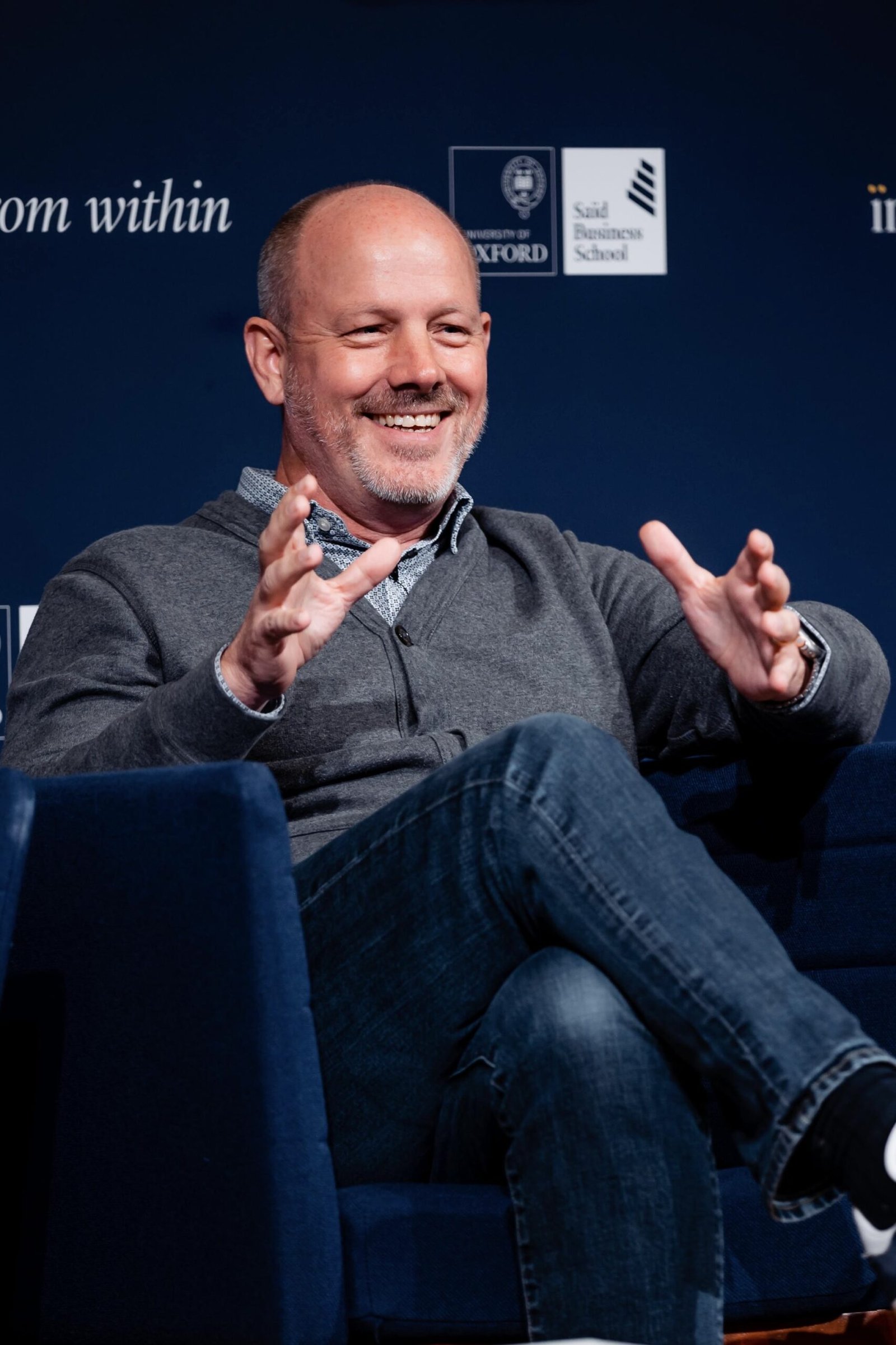
Kemmerich has spent 25 years helping people find their vocation professionally. He has mobilized nearly $1 billion in impact capital across Europe, Africa, the Americas, and Asia. He lectures at Oxford’s Saïd Business School and the IMD Executive MBA. He’s a former paratrooper, a judo champion, and the father of five. His 2025 book On Vocation: How to Align Your Purpose with Your Profession (Routledge) lays out the vocating method, his seven-step system to find your vocation and build a career around it, and in this episode of the Productivi-Tree podcast, he made the case that fixing your schedule will never fix the deeper problem.
Why High Performers Burn Out (It Is Not What You Think)
A lot of productivity advice starts with the assumption that you’re doing roughly the right work and need to do it more efficiently. Kemmerich’s starting point is different. Many high performers are executing perfectly inside the wrong life.
“When I was 33,” he said, “I had the success my parents wanted me to have. The company was great. My colleagues were great. I was successful. But I was not living my life.”
That is career misalignment at its clearest. Not a skills gap. Not a time management problem. The work itself has stopped meaning something, and no productivity system fixes that. The only real fix is to find your vocation and build your work around it.
Research backs this up. A study published in the Journal of Occupational Health Psychology found that person-organization value incongruence is one of the strongest predictors of burnout, ahead of workload and role ambiguity. You can be very good at a job and still burn out precisely because the job doesn’t connect to what you actually care about.
In the 4 Productivity Vectors framework, we separate Efficiency (doing things fast) from Effectiveness (doing the right things). Misalignment is an Effectiveness crisis. You might be highly efficient at work, but that was never right for you. Optimizing that Efficiency makes the mismatch worse, not better.
The Imprint: Where Your Vocation Actually Begins
Kemmerich traces the roots of misalignment to something most people never examine: what he calls the imprint.
Between the ages of two and six, your brain encounters something in the world that bothers you deeply. Something that seems wrong, and that you feel a pull to fix. That reaction is not random. It is the seed of your vocation, the raw material you use to find your vocation professionally. And it stays with you for life, even if you have never named it.
His own imprint formed at the age of five. His family had moved to a small village. He was the academic kid from the city, surrounded by boys from farms. They bullied him. His reaction was not trauma or revenge; it was a question: Why do they do this? Why aren’t they being good to each other? That question about human behavior and the conditions that produce it has driven everything he has done since, from judo to impact investing.
“We are not educated to know who we are,” he told me. “We are educated to make a living, not to live our lives.”
That line captures it in one sentence. The education system, built around the industrial revolution and still largely unchanged, trains people to accumulate knowledge and deliver output. It does not train people to ask what they are actually here to do. Kemmerich calls this being “the absent subject of your own education.”

Why AI Makes It Urgent to Find Your Vocation Now
For most of the 20th century, not knowing your vocation was uncomfortable but survivable. You could spend 35 years doing work that didn’t fully fit, draw a pension, and call it a life. That calculus is gone.
“Knowledge and know-how are no longer assets,” Kemmerich said. “In the past, you were educated to accumulate knowledge, which gave you a good position to get a job. That is gone.”
The CEO of Palantir, quoted during the episode, put it directly: in the AI era, only two kinds of people will thrive, neurodivergent thinkers and people with purpose. Everyone else risks being replaced not by a smarter human, but by a cheaper process.
Kemmerich saw this firsthand. He participated in a management buyout of an impact investing firm that was losing money. By automating processes, the firm cut costs fivefold, improved quality, and eliminated 60% of its staff. “When I saw this,” he said, “I said: holy moly. What will this mean globally?”
Some studies suggest AI could replace up to 40% of white-collar jobs within three years. It hits hardest among people whose professional identity is built on knowing things, lawyers, analysts, junior consultants, and financial modelers, rather than on a clear sense of what they are trying to contribute. If you haven’t found your vocation, AI accelerates the crisis. If you have it, it becomes a tool that expands what you can do.
Purpose Is Not Found, It Is Built
One of the most useful reframes in the conversation was Kemmerich’s distinction between finding purpose and building it.
Most people treat purpose like a buried object: search long enough and you’ll uncover it. That framing leads to expensive retreats, personality tests, and journaling exercises that produce insight but not direction.
Kemmerich’s model is different , and it is the most grounded approach to finding your vocation I have encountered. You start with the imprint, that earliest memory of something that felt wrong and needed fixing. From there, you build a theory of change: a coherent statement of how you can contribute to addressing that wrong. Then you translate it into a specific professional path, sector, role, organization, or business idea where your contribution actually lands.
He walked through a student at Oxford who arrived terrified. The student came in seeking his vocation in finance, but AI had already undercut that. After working through the vocational process, he found his vocation at the intersection of financial modeling and climate risk. The student had studied financial modeling. AI was already outperforming him at it. He felt his entire education was obsolete before his career had started.
After working through his imprint, the student identified a deep concern about climate change and its effect on vulnerable populations. His theory of change: using financial analysis to price and manage climate risk. His professional options suddenly expanded, including insurance companies managing climate exposure, infrastructure funds, agricultural investment, and food supply chain companies. Every one of those paths needed someone who understood both finance and climate adaptation. The AI threat didn’t disappear, but the student was no longer competing with AI on raw knowledge. He was bringing a direction that AI cannot generate.
“Vocation without action is just dreaming,” Kemmerich said in the rapid-fire round. You can find your vocation through the imprint exercise, but it only changes your life if you build on it. The framework is only useful if it produces a decision, a path you can actually walk.
What to Do When You Have a Mortgage and Three Kids
The objection writes itself: this is fine for people with options. Most people have obligations.
Kemmerich’s answer is worth sitting with. Many people feel they cannot afford to find their vocation right now, with two kids, a mortgage, and a market that punishes any gap in employment. He asked whether you are a victim of your circumstances or whether your decisions, made without full awareness of your imprint, led you there. That is not a judgment. It is a practical question, because the answer changes what you do next.
He was explicit: to find your vocation does not require quitting your job. His own wife works in insurance, not because it’s exciting, but because her vocation is protecting people, and insurance is a direct expression of that. She didn’t change industries. She changed her relationship with the one she was already in. “She doesn’t want to do anything else,” he said. When COVID hit and disrupted markets, she stayed the course rather than lurching toward whatever looked safe that quarter.
That is the practical upside: when you find your vocation, you have a stable direction to return to when everything around you is changing. Without it, every disruption is potentially catastrophic because you have no internal compass telling you what is worth protecting.

How Vocation Changes Teams and Organizations
Most of this conversation focused on individuals, but Kemmerich also works with teams at scale, and the organizational dimension matters for anyone managing people.
When people find their vocation and connect it to a shared cause, the dynamics shift. Ego conflicts decrease. Empathy increases. Net promoter scores go up. Retention improves without requiring perks or salary arms races.
When people find their vocation and connect it to their daily work, that maps directly to the Ownership vector in the 4 Productivity Vectors framework. When people take genuine ownership of their work, it is almost always because the work means something to them. You cannot manufacture that ownership through process; you can only create conditions where it is possible, and those conditions start with clarity about purpose.
Organizations where nobody has bothered to find their vocation, where hiring is purely transactional, attract people who are there for compensation rather than contribution. Fine until there is a disruption, a pandemic, a market shift, an AI wave, at which point there is nothing holding people in place beyond the next pay cheque.
See what your manual processes
are costing you in dollars.
Answer 7 questions. We calculate the dollar cost of each bottleneck in your workflow and show you which ones to fix first.
The First Step to Find Your Vocation: Your Earliest Memory
If you want to find your vocation, Kemmerich’s entry point is disarmingly simple. Ask yourself: What is the earliest childhood memory I have?
Something will surface—a picture, a scene, a moment. Don’t judge it. Start there. Then ask: what was wrong in that picture? What needed fixing? What was the child you were trying to understand or change?
That is the imprint. It might take a few quiet hours to surface fully, but you will recognize it when you find it. It explains things about your life you hadn’t been able to account for. This is where you actually find your vocation: not in a personality test, but in a memory.
From there, you start to find your vocation in practice, building, not quitting, and not burning anything down. Just taking the imprint seriously as a source of professional direction, rather than leaving that direction entirely to circumstance. That is how misalignment compounds over time, not through bad decisions, but through no decision at all.
If you want to audit where you stand right now across Efficiency, Effectiveness, Ownership, and Well-being, the free Productivity Assessment is a good place to start. It won’t tell you how to find your vocation; nothing external can do that, but it will show you which vector you’ve been neglecting, which is usually where the misalignment is hiding.
Output vs Outcome: The Distinction That Changes Everything
Kemmerich closed with a distinction that stayed with me: the difference between output and outcome.
Output is measurable. Meetings attended. Reports delivered. Revenue generated. But none of that tells you whether the work connects to the reason you wanted to find your vocation in the first place. Reports delivered. Revenue generated. The outcome is whether any of it moved anything you actually care about. The industrial model was optimized ferociously for output and left outcomes to someone else’s problem.
That worked when knowledge was scarce, jobs were stable, and disruption was slow. None of those conditions holds now. The professionals who navigate the next decade well are not the ones with the fullest calendars or the most credentials. They are the ones who know what they are trying to contribute, and can make clear decisions about what is worth their time.
To find your vocation is not a soft pursuit. It is a performance strategy, a career-survival strategy, and, increasingly, the only way to stay relevant in an AI-disrupted job market. The starting point is a single question about your earliest memory.
A strange place to start. And, Kemmerich argues, the only place to start. Whether you are 28 or 48, the work to find your vocation begins the same way: with the memory that never quite leaves you.
Florian Kemmerich is the author of On Vocation: How to Align Your Purpose with Your Profession (Routledge, 2025). Find his work at on-vocation.com and try the vocating app in beta at vocating.ai.
Listen to the full conversation on the Productivi-Tree podcast. For the full 4 Productivity Vectors methodology, the framework is here.
Join the weekly productivity newsletter at links.santiagotacoronte.com/Newsletter.