

Last Tuesday, my colleague Marco told his team the dashboard migration would take two weeks. He said it with full confidence. Eyes steady. Voice calm. He even added a buffer day “just in case.”
Five weeks later, the dashboard was still half-built. Marco was pulling late nights. His team was frustrated. His stakeholders had stopped asking for updates because they already knew the answer.
Marco is not bad at his job. He is one of the sharpest people I know. But Marco fell into one of the most well-documented traps in human psychology: the planning fallacy.
And if you lead a team, manage projects, or simply try to get things done at work, this article will show you why the planning fallacy keeps winning and what you can do to fight back.
What Is the Planning Fallacy?
The planning fallacy is a cognitive bias where people consistently underestimate the time, cost, and risk of completing a task. Even when they have direct evidence that similar tasks took much longer in the past.
Psychologists Daniel Kahneman and Amos Tversky first named this bias in 1979. Their research showed something fascinating: we don’t just guess wrong. We guess wrong in the same direction, every single time. We’re too optimistic.
Think about it. When was the last time you finished a work project and said, “Wow, that took way less time than I expected”?
Exactly.

The planning fallacy doesn’t care about your experience level. It affects junior analysts and senior directors equally. It affects individuals and entire organizations. And the worst part? Knowing about it doesn’t automatically protect you from it.
Why Does the Planning Fallacy Happen?
Understanding why your brain does this is the first step toward fixing it. There are three main forces at play.
Your Brain Loves the Best-Case Scenario
When you sit down to estimate how long something will take, your brain does something sneaky. It constructs a mental movie of the project going perfectly. No delays. No missing data. No last-minute scope changes. No colleague goes on vacation mid-sprint. No stakeholder should suddenly change the requirements after the first review.
This is what Kahneman called “the inside view.” You focus on the specific task at hand and imagine a smooth path from start to finish. You ignore the messy, unpredictable reality that surrounds every piece of work.
Think about what actually happens inside most corporate projects. You need input from three departments. One of them takes a week to respond. Another one gives you data in the wrong format. The third one agrees to a meeting and then reschedules twice. None of this appears in your mental movie.
You’ve seen it happen dozens of times before. Projects get delayed. Requirements shift. Approvals stall. Yet when you plan your next project, your brain hits the reset button and builds another optimistic movie. It’s like watching the same film with a happy ending, even though reality keeps writing a different script.
You Forget How Long Things Actually Took
There’s a memory problem baked into the planning fallacy, too. Research shows that people don’t just underestimate future tasks. They also misremember past ones.
When you think back to a similar project, you tend to compress the timeline in your memory. The three-week project becomes “a couple of weeks” in your head. The painful delays fade. The smooth parts get amplified.
This means the data you’re using to plan forward is already corrupted. Your reference point is wrong before you even start estimating.
Social Pressure Makes It Worse
In most corporate environments, saying “this will take eight weeks” gets you a raised eyebrow. Saying “we can do it in three” gets you a nod of approval.
There is real social pressure to give optimistic estimates. Leaders want to hear that things will move fast. Clients want tight timelines. And your own desire to appear competent pushes you toward the shorter number.
The research backs this up. In studies where people made their estimates anonymously, the optimistic bias shrank significantly. When nobody was watching, people suddenly became more realistic. That tells you something important about how workplace culture amplifies the planning fallacy.
How the Planning Fallacy Destroys Your Productivity (and Your Image)
This is where it gets personal. Because the planning fallacy doesn’t just affect timelines. It affects how people perceive you.
It Wrecks Your Efficiency
When your estimates are wrong, you spend the second half of every project in firefighting mode. Instead of working calmly through your tasks, you’re cutting corners, skipping reviews, and pulling in favors. Your efficiency drops because you’re constantly reacting instead of executing.
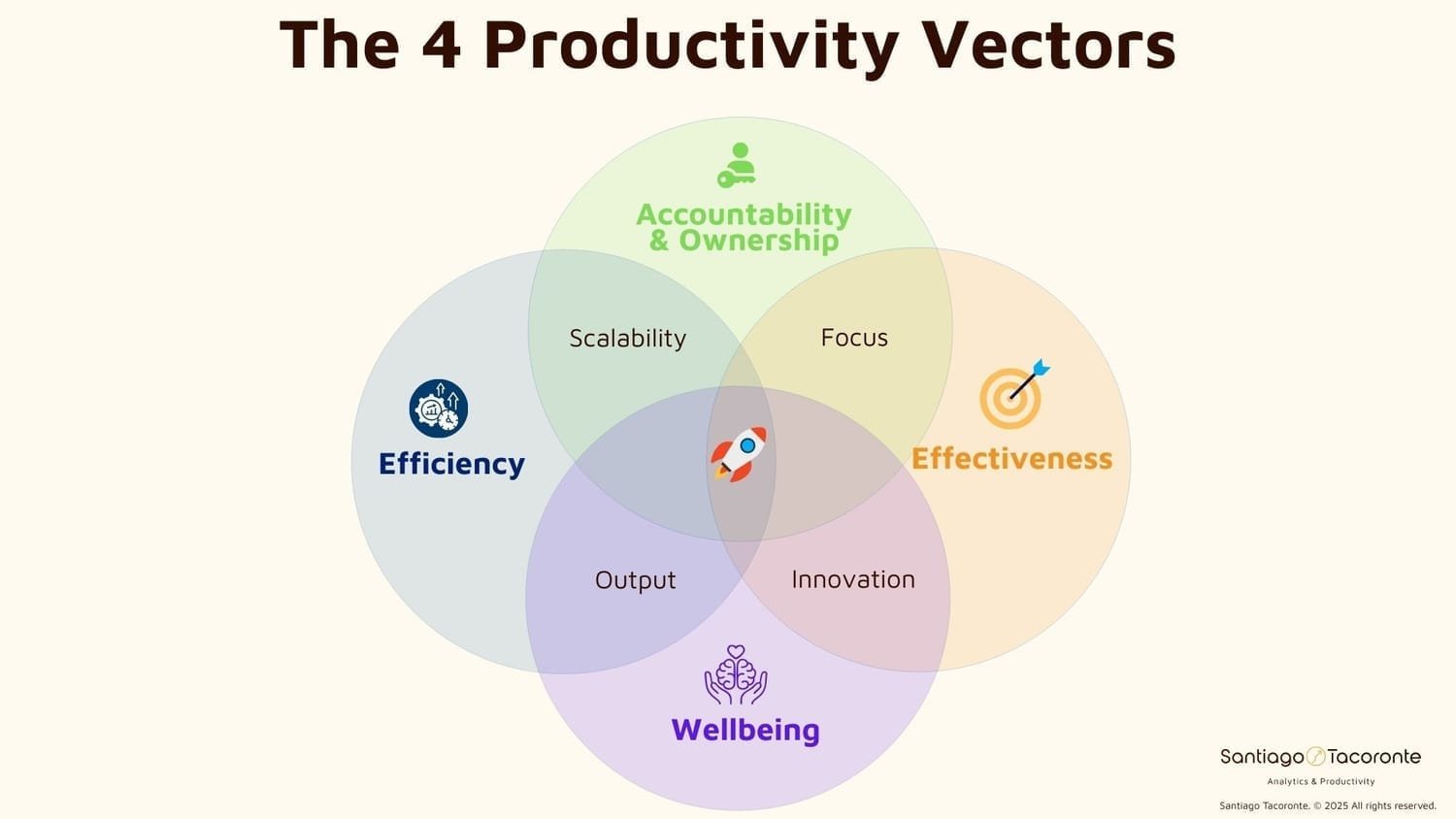
In the 4 Productivity Vectors framework, efficiency is about how you use your time, tools, and routines. The planning fallacy sabotages this vector at its root. When your plan is wrong, every hour you spend feels like running on a treadmill. You’re moving, but you’re not getting where you need to go.
It Kills Your Effectiveness
Effectiveness means advancing work that actually matters. But when the planning fallacy strikes, you end up spending your energy on catching up rather than pushing forward. High-impact work gets delayed because you’re busy putting out fires from your earlier underestimate.
This is the turtle effect. From the outside, you look slow. You’re working hard, maybe harder than anyone on your team. But your output doesn’t match your effort because you started from a flawed plan.
It Damages Your Leadership Credibility
This might be the most painful consequence. When you consistently deliver late or tell your team “just two more days” for the third time, people notice. Not because they think you’re lazy. They can see you’re working. But they start to question your judgment.
Your stakeholders stop trusting your timelines. Your team starts padding their own estimates to account for your optimism. And the worst part? You might not even realize it’s happening.
If you lead people, the planning fallacy is not just a personal problem. It’s a leadership problem. When your team sees you underestimate consistently, they learn to do the same. Or they learn to distrust your plans. Neither outcome is good.
It Hurts Your Well-Being
Planning your week well matters for a reason. When you consistently underestimate, you end up working longer hours, miss personal commitments, and feel like you’re always behind. The stress compounds. Over time, this pattern chips away at your well-being, which is the fourth Productivity Vector and arguably the one that holds the others together.
Burned-out leaders don’t plan better. They plan worse.
The Planning Fallacy in Others: Phrases That Should Trigger an Alarm
The planning fallacy is tricky enough in your own head. But when you’re a leader, you also need to spot it in others. Here are statements that should make you pause:
“This should be quick.” Quick compared to what? Quick, based on the last time this was done, or quick based on a best-case fantasy?
“It’s not that complex.” This phrase almost always precedes a project that turns out to be deeply complex. Complexity hides in dependencies, approvals, and edge cases that nobody thinks about during the estimate.
“We can definitely hit that deadline.” Confidence is great. But when someone gives you a commitment without referencing any data, past projects, or known risks, they’re probably inside the optimistic bubble.
“Let’s just get started and figure it out.” This one sounds proactive, but it often masks a complete lack of estimation. Starting without a realistic plan is how two-week projects become two-month projects. Beginning work is not the same as planning work.
“I’ll have it done by Friday.” Friday is the most popular deadline in corporate life. It’s also the least scrutinized. Ask them what specifically will be done by Friday, and how much time they’ve allocated for the unexpected.
“We did something similar before, and it was fine.” This is the memory distortion at work. The “similar” project probably took longer than they remember, involved different people, and had different constraints. Similarity is not sameness.
Your job as a leader is not to shut down optimism. It’s to test it. Ask questions. Request evidence. Compare the estimate to past performance. This is not micromanaging. This is protecting your team from a bias they can’t see.
How to Tell Leadership “It Will Take Longer” Without Looking Like a Turtle
Spotting the planning fallacy in yourself and your team is one thing. Communicating it upward is a challenge entirely different.
Because leadership will almost always push for faster. That’s their job. Timelines get compressed in every leadership review. “Can we do it in half the time?” is a question that comes up in almost every planning session. And the pressure to say yes is enormous.
But here’s the counterintuitive part: saying yes to an unrealistic timeline almost guarantees the project will take longer than even the realistic estimate. When teams commit to a compressed plan, they skip the preparation work that prevents problems later. They cut corners on scoping, skip dependency mapping, and rush into execution. Three weeks in, reality catches up. Now you’re not just late. You’re late, AND you’ve burned trust, because you promised something you couldn’t deliver.
So how do you push back without sounding defensive, lazy, or slow?
- Lead with data, not feelings. Don’t say “I think this will take longer.” Say “The last three projects of similar scope took 6, 7, and 8 weeks. We’re targeting 4 weeks for this one. I want to flag the gap so we can plan around it.” This reframes your pushback as risk management rather than resistance.
- Name the bias out loud. You can say something like “I want to make sure we’re not falling into the planning fallacy here. Our track record on projects like this tells a different story from our timeline.” Most senior leaders have heard of cognitive biases. Naming it shows you’re being strategic, not negative.
- Offer a confidence range instead of a single date. Instead of “it will take 8 weeks,” try “I’m 50% confident we can finish in 5 weeks and 90% confident we can finish in 8. Which confidence level does this project need?” This gives leadership a choice instead of a confrontation. It also forces an honest conversation about risk tolerance.
- Separate speed from effort. Make it clear that a longer timeline doesn’t mean you’ll be working less. It means you’ll be working accurately. You can say “We’ll be running at full capacity either way. The question is whether we want to arrive on time with quality, or arrive late with rework.” Leaders understand trade-offs when you frame them clearly.
The goal is to build a reputation for accurate delivery. Over time, the leader who consistently hits realistic deadlines earns far more trust than the one who consistently overpromises and scrambles to recover.
Accuracy is not slow. Accuracy is professional.

6 Practical Ways to Combat the Planning Fallacy
Knowing about the bias is important, but it’s not enough. You need concrete tactics. Here are six that work.
1. Use Reference Class Forecasting
Instead of asking “how long will this take?”, ask “how long did similar things take in the past?” This is what researchers call reference class forecasting. You step outside your specific project and look at a broader category of similar work.
If the last three dashboard projects took 6, 7, and 8 weeks, your estimate for the next one should start around 7 weeks, not the 3 weeks your gut tells you.
This simple shift from “inside view” to “outside view” is one of the most effective tools against the planning fallacy.
2. Break the Work Into Smaller Pieces
Large tasks invite vague estimates. When someone says “the migration will take two weeks,” they’re estimating a single, large task. Break that blob into 10 or 15 smaller tasks, estimate each one, and add them up.
Research on the segmentation effect confirms this works. People give more realistic estimates when they think about individual components rather than the whole project at once. The total might surprise you. It’s almost always larger than your original estimate.
3. Ask Someone Who Is Not Doing the Work
Remember the research finding that outside observers tend to be more realistic than the person doing the task? Use this to your advantage.
Before committing to a deadline, ask a peer or another team lead: “If I told you we’re planning to deliver this in three weeks, what would you say?” They don’t have your emotional attachment to the project. They don’t have your optimistic mental movie. Their estimate is often closer to reality.
4. Build Buffers That You Actually Protect
I’ve written about the importance of emergency blocks on your calendar. The same principle applies to project timelines. Add buffer time. And then treat that buffer as sacred.
Most people add a buffer and then immediately fill it with new tasks. That defeats the purpose. The buffer exists because unexpected things will happen. They always do. Protect it.
A practical rule: take your best estimate, then add 40% to 50%. If that feels uncomfortable, you’re probably in the right zone.
5. Run a Pre-Mortem
Before the project starts, gather your team and ask: “Imagine it’s three months from now and this project has failed. What went wrong?”
This technique, often called a pre-mortem, forces your brain out of the optimistic simulation and into a realistic assessment of risks. People who run pre-mortems consistently produce better estimates because they’ve already thought about the obstacles.
The pre-mortem works because it gives people permission to voice doubts. In a normal planning meeting, raising concerns feels like being negative. In a pre-mortem, raising concerns is the whole point. Your team will surface risks that nobody would have mentioned otherwise.
I’ve seen teams uncover dependencies, resource conflicts, and approval bottlenecks in 15-minute pre-mortem sessions that would have derailed the project three weeks in. The cost of prevention is always cheaper than the cost of recovery.
This also connects to the Ownership vector in the 4 Productivity Vectors methodology. Taking ownership means facing reality, not painting a pretty picture for your boss.
6. Track Your Accuracy Over Time
Start a simple log. For every project or major task, write down your initial estimate and the actual time it took. After a few months, you’ll see your personal pattern. Maybe you consistently underestimate by 30%. Maybe it’s 60%. Maybe it depends on the type of work.
Once you know your pattern, you can correct for it. This is the data-driven approach to fighting the planning fallacy. Instead of relying on gut feeling, you rely on evidence. Your own evidence.
You can do this in a spreadsheet, a notebook, or even a simple note on your phone. The format doesn’t matter. What matters is that you build a personal database of reality. Over time, this becomes your most powerful planning tool because it’s calibrated to your actual behavior, not your imagined performance.
I recommend doing this as a team as well. During retrospectives, compare original estimates with actual delivery times. Don’t use this to blame anyone. Use it to calibrate. When your whole team starts tracking accuracy together, the planning fallacy loses its grip on the group.
The Planning Fallacy at Scale: It’s Not Just You
If it helps, the planning fallacy doesn’t only haunt individuals. It operates at the largest scales of human ambition. The Sydney Opera House was supposed to be completed in 1963 at a cost of $7 million. It opened in 1973 and cost $102 million. The Denver International Airport opened sixteen months late and $2 billion over budget. The Eurofighter defense project ran six years behind schedule.
These are not cases of lazy planning. These are cases of brilliant people applying optimistic thinking to complex systems. The same thing happens in your organization, just at a smaller scale. And because it happens everywhere, it feels normal. That normalcy is exactly what makes it dangerous.
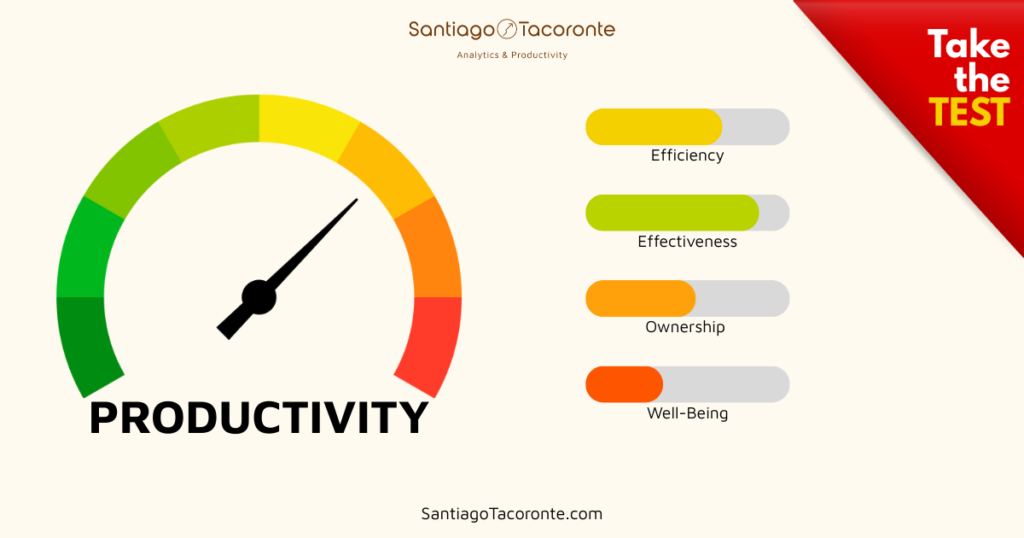
Uncover Your Productivity Score Before It Costs You
The Bigger Picture: Planning Fallacy and the 4 Productivity Vectors
The planning fallacy is not just a time-management problem. It touches all four Productivity Vectors.
Efficiency suffers because poor estimates lead to wasted motion, rework, and constant context switching as deadlines shift.
Effectiveness drops because you spend energy catching up instead of doing the work that moves the needle.
Ownership erodes when you keep missing your own commitments. Over time, you stop trusting your own plans, and so does your team.
Well-being takes a hit because the stress of perpetual deadline pressure is exhausting. And exhausted people make even worse estimates. It’s a cycle.
Combating the planning fallacy is one of the highest-leverage ways you can improve your productivity. Not because it makes you faster, but because it makes you honest. And honest planning is the foundation of every productive team I’ve ever seen.
Your Next Step
If the planning fallacy has been quietly running your schedule, it’s time to take back control. Start small. Pick one of the six tactics above and apply it to your next project.
Better yet, take the 4 Vectors Productivity Assessment to get a clear picture of where your productivity is breaking down. It takes five minutes and gives you a graded score across efficiency, effectiveness, ownership, and well-being. It won’t just tell you what’s wrong. It will tell you where to start fixing it.
If you want more frameworks like this delivered to your inbox each week, subscribe to the Productivi-Tree newsletter. No fluff. Just tools that work.
Santiago Tacoronte is a corporate productivity expert, creator of the 4 Productivity Vectors methodology, and host of the Productivi-Tree Podcast. He helps leaders and teams stop being busy and start being productive. Explore more tools and templates at the Productivity Hub.