This free Stakeholder Mapping Template helps you identify key players, understand their influence, and create an engagement plan.
Download it now and transform how you manage stakeholder relationships
A Stakeholder Mapping Template is a visual tool that helps project managers and teams identify, analyze, and prioritize all individuals or groups who can impact or be impacted by a project. Therefore, this template simplifies stakeholder management by organizing key information in one place. Moreover, it enables better decision-making by clarifying each stakeholder’s level of influence, interest, and engagement needs. In addition, using a structured template saves time and ensures no critical stakeholder is overlooked.
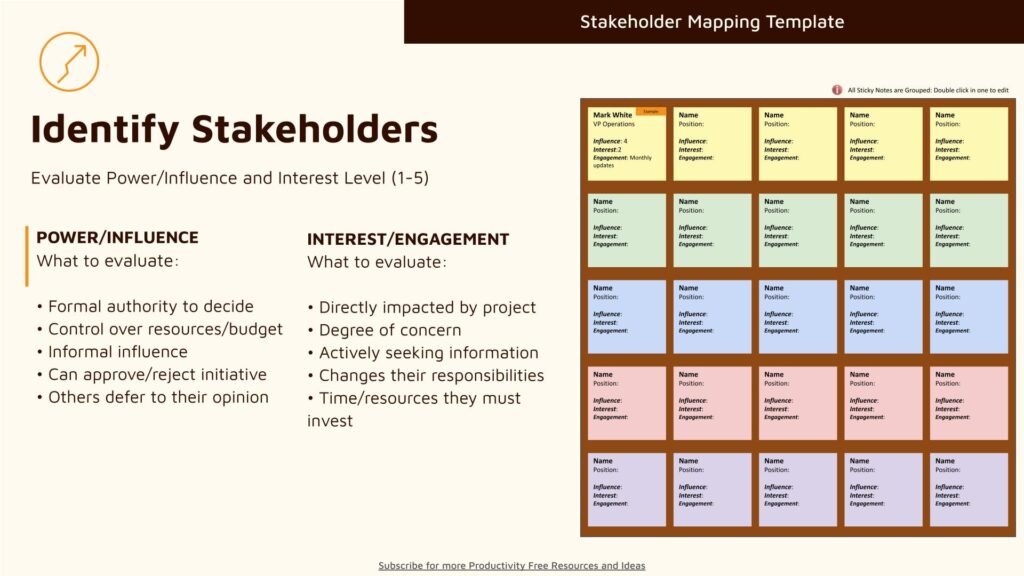
Identify who needs what information and when, ensuring everyone stays aligned and no critical stakeholder is left uninformed.
Focus your time and energy on high-influence stakeholders while maintaining appropriate engagement with others throughout the project.
Anticipate potential blockers by understanding who might resist or slow down your project, allowing you to develop mitigation strategies early.
Build champions and advocates by understanding stakeholder needs and concerns, creating tailored engagement strategies that secure genuine commitment.
Navigate organizational change smoothly by knowing who will be impacted and how, crafting targeted strategies to overcome resistance and accelerate adoption.
Make informed choices about project approach, timing, and resource allocation by having a complete picture of your stakeholder landscape and its dynamics.
Effective stakeholder management can make or break your project outcomes. In fact, research shows that projects with strong stakeholder engagement are 20% more likely to succeed. However, many project managers struggle to identify who truly matters to their initiative.
Without proper stakeholder mapping, you risk missing critical voices in decision-making processes. Furthermore, you may invest energy in the wrong relationships while neglecting high-impact influencers. This misalignment leads to delayed approvals, budget overruns, and project failure.
A Stakeholder Mapping Template solves this challenge by providing a systematic approach. First, it helps you visualize all stakeholders on a single framework. Then it categorizes them by power and interest levels. As a result, you can effectively prioritize your engagement strategies.
Consider the impact of poor stakeholder management. When high performers leave organizations, it often stems from feeling unheard or undervalued—a stakeholder engagement failure at the team level. Similarly, operational inefficiencies often result from misaligned stakeholder expectations.
By implementing a structured mapping process, you gain several advantages. Primarily, you identify potential project blockers early. Additionally, you allocate your time and resources more strategically. Most importantly, you build stronger relationships with the people who truly influence your project’s direction.
Whether you’re launching a new product, implementing organizational change, or managing a complex initiative, stakeholder mapping provides the foundation for success. Therefore, investing time upfront to map your stakeholders pays dividends throughout the project lifecycle.

1
Get instant access to our proven stakeholder mapping template. This ready-to-use PowerPoint framework will guide you through the entire process.
2
Identify all individuals and groups who can affect or be affected by your project. Then evaluate each stakeholder’s power, interest, influence, and impact to understand their importance.
3
Plot your stakeholders on the matrix based on their power and interest levels. This visual map will help you prioritize engagement and develop effective strategies for each stakeholder group.
A comprehensive Stakeholder Mapping Template includes several essential elements that make stakeholder management actionable and effective.
First, your template must capture basic stakeholder information. This includes names, roles, organizations, and contact details. However, identification goes beyond just listing names. You need to understand each stakeholder’s connection to your project and their sphere of influence within the organization.
The power-interest grid forms the core of effective stakeholder mapping. This framework categorizes stakeholders into four quadrants: high power/high interest (key players), high power/low interest (keep satisfied), low power/high interest (keep informed), and low power/low interest (monitor). Therefore, this visual representation helps you quickly understand where to focus your engagement efforts.
Beyond power and interest, assess each stakeholder’s potential impact on decision-making. Some stakeholders wield formal authority, while others influence through expertise, relationships, or resource control. Moreover, understanding these dynamics helps you navigate organizational politics effectively.
Different stakeholders prefer different communication channels and frequencies. Some want detailed weekly reports, while others prefer brief monthly updates. Consequently, documenting these preferences in your template ensures you engage each stakeholder appropriately.
For each stakeholder category, define your engagement approach. Key players require frequent, personalized communication and direct involvement in decisions. In contrast, stakeholders to “keep informed” need regular updates but less intensive engagement. This strategic approach prevents communication overload while ensuring everyone receives appropriate information.
Track each stakeholder’s current position regarding your project. Are they supportive, neutral, or resistant? This information helps you tailor your messaging and anticipate potential challenges. Additionally, monitoring sentiment changes over time reveals whether your engagement strategies are working.
Stakeholder mapping is a visual process of identifying and analyzing all individuals, groups, or organizations that can affect or be affected by your project. It helps you understand their power, interest, and influence to prioritize engagement strategies effectively.
Start by brainstorming with your team to list anyone who can impact or be impacted by your project. Consider internal teams, executives, external partners, customers, and even competitors. Think broadly about direct and indirect connections to ensure comprehensive coverage.
Yes! The Stakeholder Mapping Template is completely free to download and use. Simply enter your email address to receive instant access to the PowerPoint template, which you can customize for your projects without any cost.
For fast-moving projects, review your stakeholder map weekly. For longer-term initiatives, monthly updates work well. The key is to update it after any significant project milestone, organizational change, or whenever you notice shifts in stakeholder attitudes or power dynamics.

Implementing your Stakeholder Mapping Template effectively requires a systematic approach. Follow these steps to maximize the value of your stakeholder analysis.
Start with a comprehensive brainstorming session. Include your project team to identify every person or group who might affect or be affected by your project. Think broadly—stakeholders can be internal or external, direct or indirect. Don’t filter at this stage; capture everyone who comes to mind.
Once you’ve identified stakeholders, collect detailed information about each one. Research their roles, responsibilities, and organizational connections. Furthermore, understand their past involvement in similar initiatives. This background research provides context for assessing their potential influence.
Now, evaluate each stakeholder’s power (ability to influence) and interest (motivation to engage). Power comes from formal authority, control over resources, expertise, or network influence. Interest relates to how much the project affects them personally or professionally. Plot each stakeholder on your power-interest matrix accordingly.
Based on your power-interest assessment, develop tailored engagement strategies. High power/high interest stakeholders need intensive, personalized engagement. Meanwhile, other groups require different approaches. Document specific tactics for each category—meeting frequency, information depth, and decision involvement level.
Execute your engagement plan systematically. Planning your week effectively includes scheduling regular stakeholder touchpoints. Track all interactions, decisions, and sentiment changes in your template. This creates an audit trail and helps identify patterns.
Stakeholder dynamics change throughout project lifecycles. New stakeholders emerge, and priorities shift. Therefore, schedule regular reviews, at minimum monthly, but weekly for fast-moving projects. Update your template to reflect current realities. This living document ensures your stakeholder management remains effective and responsive to change.
Even experienced project managers make critical errors when mapping stakeholders. Avoid these common pitfalls to maximize your template’s effectiveness.
The most frequent mistake is failing to identify all relevant stakeholders. Many teams focus only on obvious, high-level stakeholders while missing grassroots influencers or external parties. However, these “hidden” stakeholders often derail projects later. Cast a wide net initially, then prioritize based on analysis rather than assumptions.
Creating your stakeholder map once and forgetting it renders the tool useless. Stakeholder positions evolve as projects progress. Someone neutral today might become oppositional tomorrow if their concerns aren’t addressed. Conversely, early resistors sometimes become champions when engaged properly. Therefore, treat your Stakeholder Mapping Template as a living document requiring regular updates.
Some project managers avoid mapping resistant or hostile stakeholders, hoping they’ll remain uninvolved. This wishful thinking creates blind spots. Instead, explicitly identify potential opponents and develop strategies to address their concerns or minimize their impact. Operational inefficiencies often result from unmanaged stakeholder resistance.
While comprehensive analysis is valuable, overly complex templates paralyze teams. Don’t spend weeks perfecting your stakeholder map before taking action. Start simple, implement quickly, and refine iteratively. A good-enough map used consistently beats a perfect map that sits unused.
Creating a detailed stakeholder map helps only if your team actually uses it. Share your analysis with relevant team members and update them regularly. Make the template accessible and reference it in project meetings. Otherwise, your careful analysis provides no practical benefit to project execution.
Many organizations still rely on simple stakeholder lists, basic spreadsheets with names and contact information. However, traditional lists lack the analytical depth required for effective stakeholder management in modern projects.
Traditional lists present stakeholders as a flat, undifferentiated group. In contrast, a proper Stakeholder Mapping Template uses visual frameworks like power-interest matrices. This spatial representation immediately reveals patterns and priorities that text lists obscure. Decision-makers can quickly grasp the complexity of the stakeholder landscape.
Simple lists treat all stakeholders equally, leaving prioritization to memory or intuition. Mapping templates force explicit prioritization based on objective criteria. Consequently, you allocate engagement resources strategically rather than spreading efforts too thin or focusing on the wrong people.
Most stakeholder lists become outdated quickly because updating them feels like administrative busywork. Templates with visual elements and strategic categories make updates more meaningful. Team members see how stakeholder dynamics shift over time, making maintenance feel valuable rather than tedious.
Reviewing a stakeholder list in meetings leads to unfocused discussions. However, a visual Stakeholder Mapping Template creates a shared mental model. Teams can discuss strategy using common frameworks, such as “This person moved from ‘keep satisfied’ to ‘key player'” fostering better collaboration and clearer decision-making.
While traditional lists served simple projects adequately, today’s complex initiatives demand more sophisticated tools. A structured template provides the analytical framework needed to navigate modern organizational dynamics effectively.
Decision-making quality directly correlates with how well you understand stakeholder perspectives and influence patterns. A Stakeholder Mapping Template enhances decisions in several critical ways.
When you map stakeholders by power and interest, decision bottlenecks become visible immediately. You see who must approve key choices and who might delay progress. Therefore, you can proactively address potential obstacles before they derail timelines. This foresight prevents the common pattern of having more data but making fewer decisions.
Complex projects involve stakeholders with conflicting priorities. Mapping reveals these tensions explicitly, allowing you to develop compromise solutions. Moreover, when you understand each party’s core interests, you can often find creative options that satisfy multiple stakeholders simultaneously.
Not all stakeholders need the same information at the same time. Your mapping template guides communication timing by showing stakeholder interest levels and influence patterns. Consequently, you can sequence announcements strategically, securing buy-in from key players before broader rollouts.
Major decisions often require coalition building among stakeholders. Your map shows potential allies and their influence networks. You can then engage them strategically to build momentum before presenting proposals to decision-makers. This preparation dramatically increases approval rates.
Decisions made without proper stakeholder consideration frequently get reversed later when overlooked parties object. Comprehensive stakeholder mapping ensures you’ve consulted relevant voices before finalizing choices. This thorough approach reduces costly re-work and preserves project momentum.
Effective decision-making isn’t just about analyzing options—it’s about navigating the human dynamics surrounding those choices. Your Stakeholder Mapping Template provides the framework for this social navigation, turning decision-making from a political minefield into a manageable, strategic process.

Creating your initial Stakeholder Mapping Template is just the beginning. Maintaining it effectively throughout your project lifecycle ensures continued value and relevant insights.
Establish a consistent cadence for updating your stakeholder map. For fast-moving projects, weekly reviews keep information up to date. Longer initiatives might require only monthly updates. However, also triggers reviews after significant project milestones or organizational changes. This discipline helps prevent your template from becoming stale or misleading.
Make stakeholder review a standing agenda item in project status meetings. Briefly discuss any stakeholder position changes, emerging influencers, or engagement challenges. This integration ensures the team maintains shared awareness of stakeholder dynamics without scheduling separate meetings.
After every significant stakeholder interaction, update your template with outcomes. Did their sentiment shift? Did you learn about new concerns? Recording these details creates institutional memory that prevents knowledge loss when team members change.
If multiple team members engage stakeholders, use collaborative platforms where everyone can update the template. Cloud-based spreadsheets or project management tools with stakeholder tracking features work well. This shared access ensures information stays current and comprehensive.
Stakeholder maps contain sensitive assessments of people’s positions and influence. Limit access appropriately and be thoughtful about how you share information. Weak communication about stakeholders can damage relationships, so maintain professional discretion while keeping your team informed.
Ready to transform your stakeholder management and make better project decisions? Download our free Stakeholder Mapping Template now and start implementing these best practices immediately.
What’s Included in Your Free Template:
Our comprehensive Stakeholder Mapping Template includes all the frameworks discussed in this guide. You’ll receive a ready-to-use template with power-interest matrices, stakeholder assessment criteria, and engagement strategy guidelines. Simply download, customize with your project details, and begin mapping your stakeholders today.
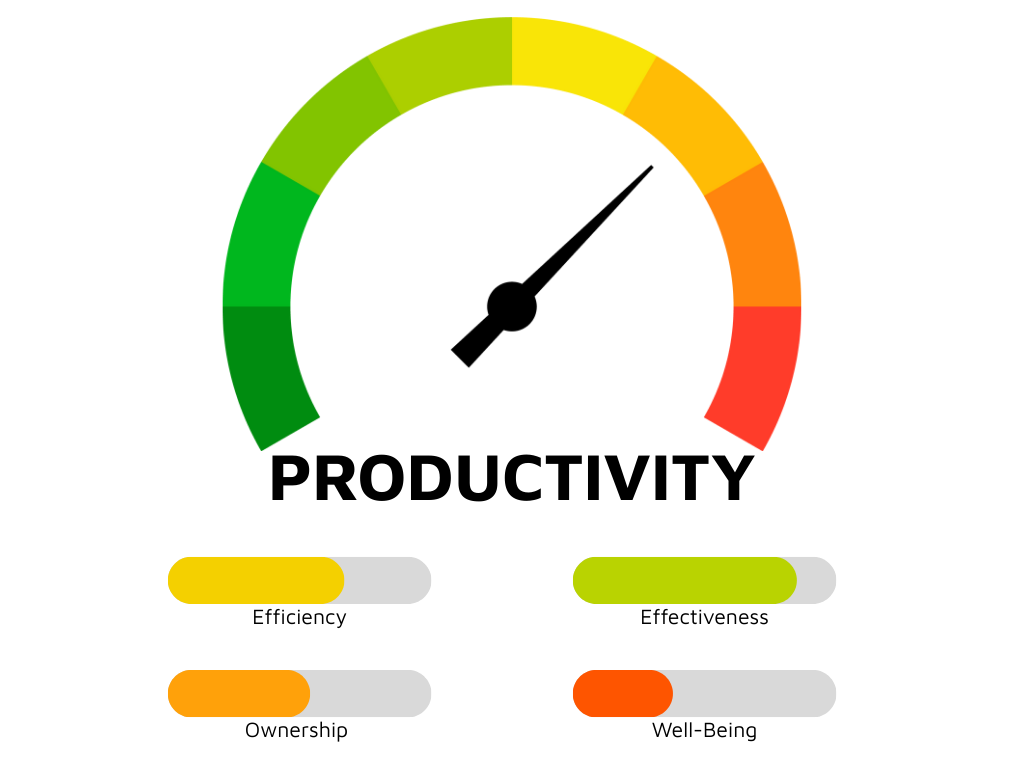
Take the FREE 16‑question assessment to see where you stand on efficiency, effectiveness, ownership, and well-being, and get a clear plan to level up.
Copyright © 2025 Santiago Tacoronte. By Designing Camp.
Take this free productivity graded assessment, and in just 5 minutes, you will know how Productive you or your team are and how you can improve.