

How to Think More Clearly When Your Productivity System Is Not Working
You have tried every productivity system. Task managers, time blocks, weekly reviews, and the second brain. The output stays the same. Learning how to think more clearly is where the real leverage sits, not in the system sitting on top of your thinking. Michael Lukich, analytics executive and author of The Stoic Systems Thinker, spent 25 years in data-driven corporate roles and high-stakes poker before arriving at one uncomfortable conclusion: most people are optimizing the wrong layer of their work. They fix the output. They ignore the thinking that generates it.
This episode of the Productivi-Tree podcast goes deep into why that happens, what the data shows, and the practical methods Lukich uses to train clearer thinking every day. Whether you have been frustrated with your own systems or simply feel like your tasks are getting harder, this is the upstream fix that most productivity content never touches.
Why Most People Never Learn How to Think More Clearly
The productivity industry defaults to the visible layer of work: tools, habits, schedules. These are easy to measure and easy to sell. What is harder to measure, and harder to sell, is the quality of the reasoning that feeds those systems. Lukich calls the gap between rising world complexity and flat or declining cognitive ability the “thinking gap.” And the data behind it is uncomfortable.
A study from Northwestern University tracked cognitive abilities over time and found that reading comprehension and mathematical reasoning have been declining in recent years. World complexity, measured by the volume of information, decisions, and interconnections we navigate each day, continues to accelerate. Put those two curves on the same graph, and the space between them is where most people’s systems quietly fail. Not because the system is wrong. Because the thinking feeding it is fuzzy.
The situation is made worse, Lukich argues, by how most professionals now use AI. “By outsourcing more and more of our thinking to this technology,” he told me on the podcast, “we are losing out on the reps we need to practice our thinking and keep ourselves sharp.” AI is not the problem. Passive use of it, without doing the cognitive work yourself, is like ordering food instead of cooking. You eat, but you do not build any skill.
If you want to think more clearly, the first step is recognizing that thinking is a trainable skill, not a fixed personality trait. The research agrees. So does 2,500 years of Stoic philosophy.
Two Types of Intelligence (And Which One You Need to Train)
Psychologists divide human intelligence into two categories. Crystallized intelligence is everything you have learned and stored: knowledge, vocabulary, expertise, and professional memory. This grows across your lifetime and is the type of intelligence you can reasonably offload to a phone or a notes app. Forgetting phone numbers because your phone remembers them is not a sign of cognitive decline.
Fluid intelligence is different. It is your ability to reason through new problems, spot patterns in unfamiliar situations, and navigate genuine uncertainty. It is the intelligence that matters most when the world changes faster than your expertise can keep up. And it is already a depreciating asset. Fluid intelligence peaks somewhere in your thirties to forties, then declines. The more you outsource it to shortcuts, the earlier the peak arrives and the steeper the descent.

Think of it as mental fitness. You do not go to the gym to stop aging. You go to slow the decline and extend the window of peak performance. Fluid intelligence responds the same way. The practice is metacognition: thinking deliberately about your own thinking, not just doing more of it.
This is the core of the Effectiveness vector inside the 4 Productivity Vectors methodology. What you think about, and how clearly you think about it, determines the quality of every goal you set, every priority you choose, and every decision you make downstream. If the thinking is fuzzy, everything built on top of it is fuzzy too.
DSRP: The Framework That Teaches You How to Think More Clearly in Practice
Derek and Laura Cabrera are systems scientists at Cornell University. Over decades of research, they identified four universal patterns that underlie all thought. They call the framework DSRP: Distinctions, Systems, Relationships, and Perspectives. In controlled experiments, deliberate practice of these four moves improved measured thinking ability by 380%. That number is worth sitting with. Most academic interventions produce single-digit improvements. A 380% gain suggests the framework is touching something genuinely foundational.
Distinctions are the first move, and Lukich argues that it is where most conflict and confusion begin. Drawing a distinction means being precise about what something is and what it is not. Most team arguments are not personality conflicts. They are distinguished failures. Two people drew different boundaries around the same concept, and nobody named the gap. Once you see this pattern, you stop asking “whose fault is this” and start asking “where did the distinction break down.”
Lukich applies it even at home. His daughters fight over a toy. One thinks it is her turn. The other thinks she is still playing. They drew different distinctions around the same object at the same moment. The fix is not discipline. It is clarity. Making the distinction explicit ends the argument.
Systems ask you to see the whole and its parts simultaneously. Most people see either the big picture or the details, rarely both. The Systems move trains you to hold both simultaneously, which changes how you design solutions and how you diagnose failures.
Relationships focus on what connects things, not just what the things are. Understanding the relationship between two elements is often more important than understanding either element alone. Most process breakdowns happen at the relationship level, not at the element level.
Perspectives are the capacity to see through another viewpoint without collapsing into it. It is not empathy in the soft sense. It is a rigorous cognitive move. Understanding how a customer, a regulator, or a competitor sees the same situation gives you information that your own viewpoint cannot access.
You can practice all four. They are moves, not traits. The practice is the point, and the more deliberately you apply them, the more clearly you begin to think across every domain of your Life.
How Stoicism Teaches the Same Lesson from a Different Century
Lukich came to Stoicism through a personal crisis. He left a corporate role in 2022 to start a business. Growth stalled. Savings eroded. Anxiety built. He walked into an airport bookstore and picked up Ryan Holiday’s The Obstacle Is the Way, built around a line from Marcus Aurelius: “The impediment to action advances action. What stands in the way becomes the way.”
That led him to the primary Stoic texts. And as he read Marcus Aurelius, Seneca, and Epictetus, he noticed something striking. The ancient philosophers were saying, in older vocabulary, exactly what the modern systems thinkers were saying. The Stoic Dichotomy of Control, which cleanly separates what is up to us from what is not, is structurally identical to the DSRP Distinctions move. Both disciplines start from the same place: get clear on what something is and what it is not before you respond to it.
Stoicism, at its operational core, is a system for directing attention and effort toward what you can control. The four cardinal virtues, courage, justice, self-discipline, and wisdom, are not aspirational ideals. They are daily operating principles. You apply them to the next decision, the next meeting, the next email. The Stoics trained on them every morning because they understood what Lukich found in the data: the quality of your response to events is the only variable genuinely yours to control.
Two traditions. Two thousand years apart. The same upstream answer: fix the thinking first, then build the system.

Your Second Brain Only Works If Your First Brain Is Sharp
Lukich built a second brain over four years and used it as the research infrastructure for his book. His setup is three layers: Markdown files stored locally for portability, Obsidian as the graph of linked notes, and Claude as the AI layer that processes across his context files. The setup is deliberate. But the principle behind it matters more than the tools.
The critical point he makes is about who draws the connections. In his system, the links between notes are ones he drew himself. The manual effort is not inefficient. It is the practice. Drawing the connection yourself means you understood both ideas well enough to see the relationship between them. AI can surface potential links across thousands of notes, but the moment of deciding “yes, these two things actually connect” is the cognitive work that compounds over time.
“The danger,” he said, “is using AI in ways that outsource rather than amplify thinking.” This applies whether you are using AI to summarize meetings, draft emails, or research topics. Used passively, each of those tasks removes a rep from your cognitive training. Used actively, where you critique the output, challenge the structure, and add your own reasoning, each one trains you to think more clearly than you did before.
If you want to know exactly where your thinking and systems are creating friction, take the free Productivity Assessment to get a personalized diagnosis. That is the upstream starting point Lukich would recommend before adding any new system to your workflow.
Poker, Probabilistic Thinking, and the Discipline Not to Memorize
Lukich has played poker seriously since 2001. He built Solver School, a YouTube channel and course platform for teaching optimal game-theory strategy. What he learned there translates directly into clearer thinking in his professional work.
A single hand of Texas Hold’em contains more decision points than atoms in the universe. The software that models optimal play cannot solve the game completely. It estimates the equilibrium between two players and their possible hand ranges. When Lukich first started using solvers seriously, his instinct was to memorize every output. Load the entire decision tree into his head. Map every exception.
That approach led to a downturn in his game. Too much clutter. Too many exceptions with no organizing principle. The improvement came when he stepped back to the fundamental question: what bigger-picture concept does this output reveal? What pattern applies across many situations, not just this one?
This shift is directly applicable to analytics and business decision-making. Data models are always somewhat fallible. The inputs contain assumptions. The outputs reflect those assumptions. Treating model output as ground truth leads to overfit decisions. Treating it as a map of the territory, useful but not the territory itself, leads to better judgment. Poker trained him to hold those two things simultaneously: use the model, do not become the model.
The Productivity Principle Worth Keeping
The productivity industry defaults to addition. New app. New framework. New habit stack. Lukich’s argument, rooted in both Stoicism and systems science, is that the more useful question is often subtraction. Which parts of your system are adding work without adding value?
The Stoics had a concept for this called the golden mean: not the extreme of maximum structure and not the extreme of total looseness, but the balance point unique to each person and each season. Lukich has experienced both extremes. Periods where managing his task manager became a task in itself. Periods where dropping too much structure meant dropping commitments.
His current operating principle is simple: introduce systems that keep friction as low as possible and that are genuinely additive to your actual goals in Life. Not abstract productivity. Not output for its own sake. The real vision: autonomy over his time, presence with his family, and work that matters.
That is a Stoic insight applied practically. The point is not to optimize everything. The point is to be clear on what you are optimizing for. Most people skip that step. They add another system without asking whether the system serves the Life they want. Thinking clearly about that question first changes everything that follows.
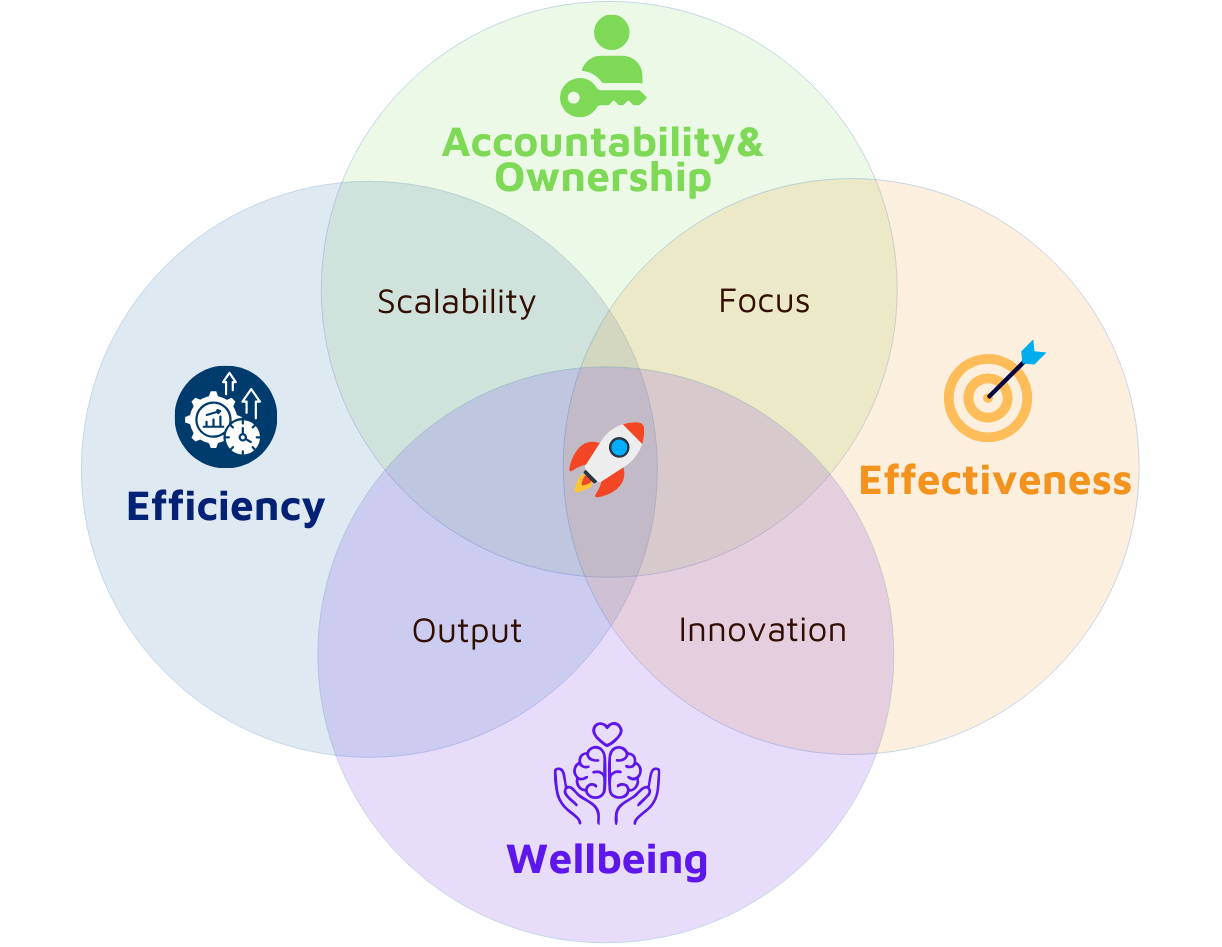
To go deeper into the frameworks Lukich builds on, visit the Productivity Hub for tools and templates, and explore the 4 Productivity Vectors methodology to see how Efficiency, Effectiveness, Ownership, and Well-being work together in a complete system.
Michael’s book, The Stoic Systems Thinker: The Journey to Phronesis, is available at stoicsystemsthinker.com/book. His newsletter is published roughly every two weeks and is free.
Frequently Asked Questions
How to think more clearly when you feel overwhelmed?
Start by slowing down and applying a single Distinctions move from the DSRP framework: identify precisely what the situation is, and what it is not. Most overwhelm comes from blurring the boundaries between what you control, what others control, and what nobody controls. The Stoic Dichotomy of Control is the same move phrased differently. Once you draw that line clearly, the pile of tasks sorts itself into what requires your attention now and what does not.
What does it mean to think more clearly?
Clear thinking means making accurate distinctions, seeing how the parts of a situation relate to the whole, understanding the connections between elements, and holding multiple perspectives without collapsing into any single one. These are the four moves of the DSRP framework. Clarity is not a fixed trait. It is the result of deliberate cognitive practice applied consistently over time.
What is the DSRP framework?
DSRP stands for Distinctions, Systems, Relationships, and Perspectives. Developed by Cornell systems scientists Derek and Laura Cabrera, it identifies four universal patterns underlying all thought. Deliberately practicing each move has been shown in controlled experiments to improve measured thinking ability by 380%. It is one of the most evidence-based frameworks for improving thinking in real-world situations.
How does Stoicism improve thinking and productivity?
Stoicism trains the Dichotomy of Control: what is up to you and what is not. Applied daily, it eliminates reactive decision-making and focuses your attention on the variables you can actually change. This is structurally the same as the DSRP Distinctions move. Both traditions teach the same foundational cognitive skill through different vocabularies. The Stoics trained on it every morning, treating it as a practice rather than a one-time insight.
Can you train fluid intelligence?
Yes. Fluid intelligence, your ability to reason through novel problems and handle uncertainty, responds to deliberate practice. Research shows that actively engaging in metacognitive work, thinking about your own thinking, practicing frameworks like DSRP, and avoiding pure passive consumption of AI outputs all contribute to maintaining and extending peak fluid intelligence. It will still decline with age, but deliberate practice extends the window and significantly slows the decline.
Is thinking a skill you can improve?
Yes. Cognitive scientists now broadly agree that thinking is a trainable skill. The DSRP research from Cornell showed a 380% improvement in measured thinking ability in controlled experiments. This does not mean any intervention works. Passive exposure to complex content does not help. Deliberate, structured practice of specific cognitive moves does. Michael Lukich’s framework combines DSRP and Stoic practice into a daily system for precisely this kind of training.
Podcast Episode Transcription
Santi Tacoronte (00:05)
Michael Lukich, welcome to Productivity.
Michael Lukich (00:10)
Thanks for having me, I’m excited to be here today.
Santi Tacoronte (00:13)
Michael, you have a very interesting ⁓ intersection ⁓ between stoicism, marketing, poker. How did you reach between all these things that you don’t? How did you reach to that? How did you converge to the point where you are today? And what makes you so attracted to stoicism and other ways of philosophical and practical thinking?
Michael Lukich (00:43)
Yeah, I I I think it’s it’s been a long journey. you know, you’ve kind of ⁓ laid out you know, the the analytical and and and and and data side of things and then you know, poker and you know, they’re all I think different paths that have kind of converged to, you know, the point that I’m at now. ⁓
I’ll give you kind of just a a a like a brief background ⁓ about me and then kind of how how how that got me to where I am today. ⁓ so you know, from a professional standpoint, career-wise, I I’ve spent almost twenty five years now professionally working in in marketing data and technology. first as a as a consultant, but also as an in-house practitioner at at companies across a variety of industries.
⁓ along the way, I’ve also had a a five-year stint as an adjunct professor at Georgetown teaching analytics to to to post grad students. And most of my career has been about in that in that realm has been around ⁓ helping organizations make better decisions with the information in front of them. And I think that lends itself to you know thinking in structure, thinking in frameworks, ⁓
You know, a lot of that came from an engineering degree background. And then through the my years as a consultant being, you know, hammered with you know very ⁓ frameworks and and and structured ways to to look at problems and and and of organizations. ⁓ outside of of my professional life as a as ⁓ you know for you know my adult life, I I’ve moonlighted, as you said, as a as a poker player and and really as students of the game, because you know the game of poker, in my view, is is is a beautiful game.
⁓ it’s it’s very quantitative. ⁓ it’s ⁓ but also at the same time it it’s you know there’s a philosophical element of it, right? So there’s there’s a game about it it’s taught me more about you know things like variance and probability and and and the limits of our control than you know really anything else in my life. And and you know, I think ⁓ those kind of that that was what really brought me into ⁓ combining a lot of the the structured way of looking at things through a data-driven lens, but also.
layering in the the limits of control, layering in variance, layering in luck, ⁓ which has kind of brought me into the the philosophical ⁓ view of the world too. I I didn’t necessarily get into ⁓ stoicism or or philosophy until a few years ago. So this was I had always kind of had that that systems thinking structured lens of looking at the world and then back in
In 2022, I I I had I left I left a business, I ⁓ or left a job. I tried to start my own business. And despite all of the effort that I was putting into it, it it was failing, right? It was I I was profitable, but I was, you know, really it was a nice side hobby. It wasn’t a a real business. And I was watching my, you know, savings kind of deteriorate a little bit. And, you know, that put me into a little bit of a of a you know tougher place in my life. I was ⁓
know full of anxiety, I was full of stress, ⁓ you know, feeling a lot of pressure. And I I happened to just by chance come across a stoicism book ⁓ while walking through an airport bookstore. It was Ryan Holiday’s book, The Obstacle is the way. And you know, that something spoke to me in in that book about just the ideas of of stoicism. And you know, The Obstacle is the way is is a book that’s you know really geared around a quote from Marcus Aurelius, which is
⁓ the impediment to action advances action. what stands in the way becomes the way. And it’s the idea here being that ⁓ our obstacles in our lives are actually opportunities for us to to grow, to ⁓ you know, find paths in life that we can improve upon ourselves ⁓ you know through ⁓ through those experiences. And reading that text kind of led me deeper into the Stoic worlds, which was you know, reading the source texts of ⁓ Marcus Aurelius, of Seneca, of Epictetus.
And and as I’m reading, I I have this strange recognition that a lot of these ancient philosophers, ⁓ you know, as in their writing 2,000 years ago, they were saying a lot of the same things ⁓ you know that I had read in a lot of these, you know, very modern systems thinking texts, just using different vocabulary. And and ⁓ you know, this kind of led me on this exploration of of you know these two kind of lenses combined.
systems thinking and stoicism. And you know, the book that I’ve been working on over the last couple of years is really the synthesis of of of that recognition.
Santi Tacoronte (05:20)
So ⁓ you just launched a book. Congratulations. Amazing. Good job.
Michael Lukich (05:23)
Yes. Thank you.
The audience approves too, so
Santi Tacoronte (05:33)
Tell us about your book a little bit. I’m curious about two things. Let’s break down two topics first. What is Stoicism? And I want you to ⁓ condense it, hyper hypersummarize it in one minute. What is the philosophy of the Stoics? What did they do differently? What they promote. And how did you blend frameworks? Because I read that this is not a philosophy book per se.
It’s a hybrid book between philosophy, your experience, and your frameworks or frameworks that you used as a consultant, as a professional. Take us through this. Take us first through the Stoicism and then the book.
Michael Lukich (06:17)
Great, yeah. So so Stoicism was was founded in ⁓ about 300 BC ⁓ in Athens by a merchant named Zeno. And Zeno ⁓ was was a merchant, he was traveling to Athens and he had a shipwreck and he lost everything in the shipwreck. And he happens to wander into ⁓ a bookstore in Athens, and while he’s at at this store in Athens, he is talking to you know one of the ⁓ the the
⁓ patrons in the bookstore and asks him ⁓ about about philosophy and ultimately was led to ⁓ you know the the Greek agora where where where all the philosophers gathered and and started he that’s where he really started his his journey into philosophy. And he ⁓ started ⁓ traveling with a group of philosop philosophers called ⁓ the Cynics and ⁓ they and and you know that so Stoicism actually descends from ⁓ from the philosophy school of of cynicism
And he took some of the ideas from the cynics. you know, he found ⁓ a lot of the the ideas that they had ⁓ you know, was was you know interesting to him, ⁓ but kind of ⁓ shifted more towards ⁓ focusing on on living you know good and virtuous and and flourishing lives. So, you know, what I what I would say about Stoicism, Stoicism is is a practical philosophy. It’s it’s it was founded in ancient Greece. It really, the the the modern stoicism that we know of actually more so developed you know.
Like a lot of things. It went from ancient Greece to ancient Rome. ⁓ and it’s built around one core insight, which is we don’t control outcomes, we only control our inputs and our responses to events. ⁓ everything else that happens is ⁓ we we may prefer it or we may ⁓ not prefer it, but ultimately ⁓ that’s external. So the and the stoics are training themselves to make this distinction very, very clearly. ⁓ what’s up to me?
versus what isn’t up to me. And the rest of their of their philosophy is to direct their entire moral, their entire intellectual effort towards the things that are up to them. and and that’s how they they kind of geared themselves around there. It’s there’s there’s four main ⁓ you know virtues in stoicism.
courage, justice, self-discipline, and wisdom, and and those are kind of the four cardinal virtues within the philosophy. And everything is around ⁓ trying to develop a life where they are living according to those virtues, ⁓ and you know, living in accordance with with nature, trying to live a a well-meaning and purposeful life.
Santi Tacoronte (08:52)
Well, you say in your book that we are living a thinking crisis.
⁓ I’m pretty sure more most people think that they are good at thinking. So what do you mean with the thinking crisis?
Michael Lukich (09:14)
Well, ⁓ you know, so I have ⁓ I think of this through ⁓ there’s there’s two graphs that I always I I always think of, and I think of these together. ⁓ and you know, the first is is a a graph that we’re all familiar with. We’ve seen it a flavor of this in virtually every part of life, and it’s the exponential curve. ⁓ yeah when you look at how virtually everything in life, ⁓ in the human world, or I should say everything, but but l many things
Over time have progressed. We see this exponential curve ⁓ shape all the time, right? ⁓ through things like you know, interconnections, complexity, you know, money, right? like there’s this is it there’s there’s the exponential curve is everywhere. And I and I think we we in intuitively sense that very tangibly the world is growing much, much more complex. I mean, if we think about
the world today in twenty twenty six versus even, you know, ten years ago, twenty years ago. ⁓ there are ⁓ you know, everything has has shifted, you know, digitally. There’s you know, technology is is ⁓ kind of abundant in our world and ⁓ we are bombarded with notifications, algorithms, you know, it’s
⁓ it’s the world is is is incre growing incl increasingly complex with all of these kind of like inner connections that that have been ⁓ you know formed in the world. So so that’s kind of the one side of of ⁓ of you know the world is growing more more complex. The other side of it is our ability to handle this, which is our our overall thinking ability. And you know, while I I agree that there are you know many people believe that they are smart and I’m not saying discounting that there are incredibly brilliant people all over the world.
Right. ⁓ there’s there’s obviously you know super smart people all over the world. But if we actually look at the data ⁓ tangibly ⁓ in aggregate, our thinking ability appears to be decreasing. ⁓ so there’s been ⁓ numerous studies that are are looking at our our our overall thinking ability by measuring ⁓ intelligence of of individuals. And there’s a is an effect that ⁓ over the 19th century, or sorry, over the 20th century that was called the Flynn effect.
Which was over the 20th century, we saw that IQ scores or intelligence scores were continuously going up. ⁓ and that was really assumed to be the trajectory that the the human race was was was going in, is that we were just getting smarter and smarter over time. But what we’ve seen in in some data now is that that appears to be ⁓ you know, appears to have plateaued and may even be decreasing. So there’s a a recent study at a northwestern university that was looking at
⁓ you know, various ⁓ thinking abilities. And what what what we’ve seen is that over the course of the last ⁓ number of years, we’ve actually started declining in in in ⁓ reading ability, we’ve started declining in ⁓ some more mathematical abilities. Really the only areas of thinking where we have not shown a decline and we’ve actually continued to increase it has been in spatial reasoning, which I kind of find somewhat interesting. And I I my theory on that is actually that we
You know, we we we use a lot more technology. So we start we can start visualizing things through 3D a little bit more effectively through the use of technology. So our spatial recognition is actually increasing, but the rest of our thinking appears to be ⁓ plateauing. So we have these two curves, the exponential curve that’s going up, and then we have this ⁓ our thinking ability, which is plateauing and going down. I think of those two together and I transpose those two together to and and that’s what that space between those two curves is what I call the thinking gap. And
You know, the first one, the exponential curve, there’s nothing we can do about that. The world is gonna continual continually grow more complex. ⁓ you know, AI is getting ⁓ more and more powerful ⁓ by the day. I mean, I I still kind of find it amazing that ⁓ LLMs are less than four years old when they feel like you know they’ve they’ve grown in in popularity and and and power over over what even what they could have done when when ⁓ they were announced and and released in ⁓
a few years ago. ⁓ so the world is going to continue to grow more complex. ⁓ the crisis that I think ⁓ is that’s appearing is that we are our thinking ability is is is declining. ⁓ and by us taking some of these ⁓ these steps to outsource more and more of ⁓ of our thinking to this technology, we’re losing out on the reps that we need to practice our thinking and ⁓ keep ourselves sharp.
And you know, i if we don’t necessarily practice ⁓ and and keep our thinking sharp, that that we’re we’re gonna see that decline continue to to manifest itself.
Santi Tacoronte (14:05)
But ⁓ is this a bad thing that our thinking ability is plateauing somewhat? See, definitely with you on the part that we are commissioning and ⁓ outsourcing ⁓ the next level of intelligence to AI. What would Stoic says said to things that or to statements like the less you have in your head?
the more happier you will be.
Michael Lukich (14:38)
You know, I I I I’m not gonna argue that ⁓ there is some of of of outsourcing our thinking that is a good thing. ⁓ so there’s there’s two types of intelligence. there’s ⁓ there’s there’s cr and this is what psychologists will will will split intelligence into crystallized intelligence and fluid intelligence. So crystallized intelligence is our ability to ⁓ retain facts.
⁓ so and this continually grows over the course of our lives. So, yes, we forget some things, but you know, if you talk to ⁓ your 90-year-old grandfather, ⁓ he’s gonna have a wonderful plethora of stories that he can ⁓ pull from in in in his brain. ⁓ but you know, outsourcing some of our crystallized intelligence to AI ⁓ or or technology i is fine. I mean, I I you know I
used to as a younger ⁓ younger child before having ⁓ a mobile phone, I used to remember a bunch of of phone numbers. I used to have to you know remember addresses and you know birthdays and all of all of this these random facts that would be ⁓ stuck in my head. ⁓ that’s the crystallized intelligence that we’re starting to outsource a lot of that to technology. And and I I think that that’s actually probably a net positive. ⁓ the other side of our intelligence though is called fluid intelligence.
And fluid intelligence is ⁓ it’s already a depreciating asset. So if you if you look at our fluid intelligence over time, ⁓ our fluid intelligence is our ability to think through problems, it’s ability, it’s our ability to ⁓ work through really challenging ⁓ you know situations and be able to ⁓ navigate our way through those problems. That that ability in humans.
peaks usually around the in in in the in someone’s like 30s or maybe 40s and then starts declining over over over time. That to be able to the more and more the more we are outsourcing our fluid intelligence, the more costly it becomes because we see the peak ⁓ it the peak doesn’t doesn’t rise as high and we peak a little bit earlier and start declining faster. So that’s the intelligence that we need to continually train.
⁓ we need to train it by ⁓ practicing our thinking, by thinking about our thinking, which is you know called metacognition. And ⁓ you know, by doing ⁓ by by by this by practicing this, we’re not gonna necessarily fight time, right? Like we can’t obviously win this battle. Our fluid intelligence is gonna continually decline over time as we get older and older. But ⁓ that’s what helps prolong us. And I I kind of look at this as like this is our mental fitness, and this is this is our
⁓ going to the gym just like we would physically to keep our bodies from declining over time. ⁓ practicing our fluid intelligence and continually working on that ⁓ is what keeps our our mental faculties from declining over time.
Santi Tacoronte (17:35)
What kind of practices can the audience do to keep their fluid intelligence sharp or do this fitness or do this exercises that you that you’re talking about? What is it? Languages, doing math, reflection, meditation? What’s your recommendation?
Michael Lukich (17:55)
All of the above, and you know, there is no one magic ⁓ you know program to do so. it’s it’s really about being very conscious and purposeful in in our our our thinking. ⁓ I I I will refer people to there’s ⁓ two system scientists, they’re out of Cornell University that I cite very heavily in the book. ⁓ I I devote the entire chapter two of the book to them. ⁓ and their their names are Derek and Laura Cabrera.
⁓ they are ⁓ the they’ve they’ve written a couple systems thinking books and and they’re really in in my view they’re they’re you know two of the the more leading modern systems thinkers in in this space. but they have a a a theory that they call DSRP. And they they DSRP stands for distinctions, systems, relationships, and perspectives. And
They call they argue that these are the four universal patterns of organization in thought. ⁓ and you we can go through each of these individual ⁓ you know, ⁓ ones, DSRP, but for each of those, they they have specific moves that you can actually practice. practicing making distinctions, which is drawing a line between something, what something is and what something isn’t.
⁓ you know, practicing understanding about systems, which is understanding the concept that every whole is made up of parts. And you know, even those individual parts are their own systems that are made up of parts themselves. ⁓ you can practice thinking about relationships, which is the interconnection of things, ⁓ how everything kind of relates to one another. There’s there’s a push and pull with with lots of things, and ⁓ you know, there’s there’s interconnections that we can we can you know see in the world.
And then practicing looking at perspectives, which is understanding that everything has a point and a view, right? So there’s you know, what I see ⁓ when looking at something might be different than what you see, which might be different than what somebody else sees, but all of those perspectives ⁓ can help us ⁓ by understanding those different perspectives, we can start understanding ⁓ you know a little bit more about the world. And again, there’s no magic way in which we can, you know, just magically think better, but
What the Cabreras have shown is by actually actively practicing these moves in some controlled experiments, they’ve seen people’s ⁓ thinking increase, their abil thinking abilities increase upwards of 380%, which is, you know, you don’t usually don’t see lifts that high in in in in in ⁓ academic studies. but you know, just the conscious, ⁓ the conscious recognition of
and and and bringing this to the forefront of thinking about these very specific moves massively increased you know, the performance of of how people are actually thinking through problems in in real time.
Santi Tacoronte (20:53)
So the DSRP, it’s a framework by the Cabreras that we can read in their in their books. How how does it look in practice, more or less? And on just to bring it down to our daily lives, Michael. I’m gonna take a decision or I’m in the middle of something, work, a project, ⁓ family. How how do you put this in practice? And it it it can be as simple as you want to to put it.
Michael Lukich (21:00)
Correct.
Yeah, well, I mean, if you think through each of these four individual rules, we can see examples of those anywhere, right? So, ⁓ you know, I’ll just use the first one as an example, which is distinctions. ⁓ almost, you know, I I’ve been working in in the professional world for you know tw almost twenty five years now. I’ve worked for a lot of different companies, big and small, and I I’ve seen a lot of conflict, right, amongst amongst
Teams, you know, in your day-to-day, whether it’s you know within the same team, whether it’s you know multiple teams kind of working within the same company. Almost always, whenever there’s a conflict in teams, there’s there’s some sort of boundary issue or which is a distinctions issue, ⁓ drawing a line between what something is and what something isn’t. So, you know, giving an example is you know, oftentimes
We there we might have a ⁓ you know a part of ⁓ of our day-to-day job that you know we think is part of our job and we draw a distinction around the different components that are part of our job. Whereas somebody on a different team might think a component of that is actually their responsibility, or they may not necessarily think that’s actually part of our responsibility. And we have this argument or disagreements because we both drew different distinctions. We both drew a different boundary about.
what was my job versus what was somebody else’s job. ⁓ you know, I I I we can extend that to our personal lives too, right? I mean, I have two daughters ⁓ who are ⁓ you know, they get in their own share of of of conflict themselves, right? Just naturally ⁓ you know, just growing up in in life. And ⁓ you know, again, oftentimes th their conflict is is based off of a distinction. You know, one person is playing with a toy
One of my daughters is playing with a toy, and ⁓ the other one thinks it’s it’s her turn to play with that toy. ⁓ she so she has drawn a different distinction in her brain around ⁓ it’s my turn now for that toy, while the other one has the a slightly altered distinction. No, I’m actually already playing with this toy myself. So they’ve drawn these different distinctions, and you know, because these aren’t necessarily aligned.
we see that conflict manifest itself. And, you know, again, this this happens everywhere. I mean, that’s just the one one of the rules. And I can keep going for for specific examples through, you know, the systems, relationships, and perspectives as well. They they don’t just apply to work. They don’t just apply to our personal lives. Like they are universal to everything and the way in which we are actually structuring ⁓ the the way in which we’re thinking about the world.
Santi Tacoronte (24:01)
Definitely something to dig in, Michael. I wanna talk about something I’m very passionate about, something I’ve been trying to build, not very successfully, which is called the second brain. Alright. Let’s first bring down or break down the concept of the second brain to the audience. What is having a second brain?
Michael Lukich (24:26)
Yeah, ⁓ you know, it’s ⁓ well the second the term second brain, ⁓ you know, I I I I don’t actually have the origin of of the term second brain. I I I believe it came from you know, I I I don’t I don’t actually know the the the the you know complete origin of the term second brain, but it was popularized in a in a s in a 2022 book, or at least this is where I ⁓ you know came across this was ⁓ a book by Tiago Forte, who’s a productivity expert ⁓ called Building a Second Brain.
And you know, I’ve I’ve been fascinated by this idea for the last you know four years or so now. And I’ve been you know trying to to work on and iterate and build my own second brain for that time. it’s not actually building a a second ⁓ physical ⁓ you know brain. ⁓ you know, the the way to think about the second brain is ⁓ you know having an external system outside of our own heads that can help us ⁓ manage the the knowledge that we you know we capture over the course of our of our lives.
And you know, this idea does not is not limited to just technology. I mean, there’s ⁓ there are analog second brains as well, too. ⁓ you know, I have a notebook right here. Like you can argue that a notebook is essentially a second brain too. It’s a place outside of our brain in which we can process and organize and store our thoughts. you know, the
The way in which I think about the a second brain though is that ⁓ it it should be something that we utilize to enhance our thinking, right? It’s you know, we you know and and the problem statement to me is is is pretty it’s it’s pretty ⁓ you know very it’s a modern problem that we have here is that we’re we’re constantly bombarded with information. And I I mean I have
You know, lots of different browser tabs open on my window. I’m constantly reading different articles or books or watching YouTube videos or listening to podcasts. And all of these great ideas come into my brain. Trying to sort all of that in our own brain, our first brain, right, is is a really challenging endeavor. And ⁓ you know, that’s where a second brain can come into play is taking all of the knowledge that that that we consume and we accumulate, and then organizing that in a second external place.
So that we can access that later. ⁓ that’s the goal, is we want to access that later and be able to utilize that information at some point in our lives. ⁓ this is where ⁓ I I’ve shifted towards that digital world, right? You know, while the notebook is great and ⁓ the notebooks have a lot of of wonderful uses. they’ve they’ve been you know ⁓ utilized for for thousands of years now. ⁓ notebooks at the same time.
are hard to actually use to retrieve that information. You need to be really, really well organized to be able to, you know, find the information again. ⁓ I I can’t tell you how many notebooks that I’ve had where I’ve written down notes and I’ve never returned to those again. ⁓ and there’s probably some really, really valuable information in those notebooks that I could utilize, whether it be in, you know, future writing, whether it’s in, you helping me kind of build out future ideas, you know, whatever the case may be.
And and this is where digital technology has helped us with this, right? And and we can we can take things like ⁓ the browsers, ⁓ the browser tabs that we have where we read a lot of information. Well, now we have web clippers where we can take the URL or you know individual snippets of text from that page and pull that into some software. We can take YouTube videos and we can pull transcripts or videos URLs, pull that into some software. ⁓ and the idea here being is that
everything that we can consume or the things that we want to save that we can consume, we can pull that into a some sort of centralized resource that we can organize, we can categorize, and hopefully be able to pull upon later on when we want that information.
Santi Tacoronte (28:25)
Very interesting. Do you think that this could help us with our fluid intelligence when we when it starts decaying in around your forties, fifties? I do have a lot of problems, Michael, with memory. I I ⁓ you know, unless I go and and pick up and I’ve been using Google timeline to do this, the moment I see the event I remember what I did, but naturally it wouldn’t count to me. So I’m just thinking that maybe a second brain can help me refresh.
all these content, all these thoughts that I had during my first forty years of life.
Michael Lukich (29:02)
Yeah, I mean I I absolutely think it can, especially as you know, and this is one thing I’ve been experimenting with recently has been ⁓ connecting large language models to the various content in my second brain. And and I I’ve I’ve been iterating on this because you you need to be able to provide the right organizational structure and then provide that mapping to a large language model so that it’s able to know where it should be looking for things.
But ⁓ you know, first off, you know, back to to to your first point there of of help helping us kind of remember things a little bit more. When we learn when we actually capture some some new knowledge or new information, we can, you know, with our with us with the second brain ⁓ ability, we can tag that information ⁓ with the right ⁓ additional metadata to help us surface that later on. So maybe I I capture a note that ⁓ I want to surface one year from now, right? It’s it’s an anniversary type note.
Well, I can tag ⁓ something in that note to say ⁓ that that that can and and build a process to to surface things that are tagged by certain dates, right? I I that can be a process that I can actually build out in in a second brain digitally so that I don’t need to remember that note anymore. It just stays in my second brain and then a year from now it just gets surfaced up according to some rules that I’ve already baked into the to the system. ⁓
If you’re looking to you know, one one use case that I really think of from a just how can we ⁓ use use these second brains to to to improve our thinking and and kind of especially our fluid intelligence, right? Which is which is us being able to think through new ideas, is we have all of this disparate ⁓ knowledge in our in our in our brains ⁓ that we’ve kind of now we can now dump into ⁓ a second brain.
This is where language models can be really, really effective is taking a look at all of the different ⁓ content that we have across all of our different topics and finding those connections across two or three or four or multiple notes within our our our second brain system that we can then and and can surface those together to us so that we can start drawing on those connections. So that when we see those two things together, we can say, that’s actually pretty interesting. And you know, to me, that’s that’s partly.
How I started kind of going down the rabbit hole of systems thinking and stoicism, right? It’s it’s looking at two very seemingly unrelated ideas and it’s just exploring the overlap amongst those ideas and taking them down different rabbit holes. I think a second brain systems can can help us surface those those those possible threads or connections that you know we may want to travel down ⁓ at some point in our in our lives.
Santi Tacoronte (31:51)
When we speak about productivity, Michael, most advice out there, it’s about adding addition of systems. Use Pomodoros, time blockers, ⁓ task planners, and more recently AI, which ⁓ in many cases is bringing more work and more headache than people had before.
But when you look at stoicism, it’s kind of about the opposite: subtraction, simplification, minimization, minimalism. ⁓
Why is it so hard to subtract in our society? Why we need to keep adding stuff on top of stuff? If you if you had already a very busy life with work and and family and notification, now you added AI. You know, I I said this in another episode. I read this quote, I loved it. It said, before AI I had three unfinished projects.
After AI I have fifty five unfinished projects run. Why do we add so much?
Michael Lukich (33:01)
Well, you know, ⁓ AI, that’s a that’s a funny anecdote here. And ⁓ you know, AI can be a great ⁓ amplifier of of us, but you know, that sounds like a ⁓ a personal issue that ⁓ you know, it’s only gonna amplify ⁓ the issues that we actually have, right? And ⁓ you know, I I do wanna push back slightly on on the one point that you made about like stoicism being exactly the opposite, which is like less, less, less.
the Stoics actually had a had a had a concept they called the golden mean, right? And this was that ⁓ often ⁓ you know where we wanna be is is in this kind of like center of of things. So we actually, when you look at the two virtues, there you kind of can think about this along a spectrum, which is we don’t want to be on the the far the far end of ⁓ of ⁓ like so okay, using courage as a virtue, right? So there’s ⁓ there’s on on one end it’s being like, you know.
the the bravest but but kind of reckless, you know, as reckless of a person as you possibly can be. And on the other end, it’s probably around being, you know, cowardice and stuff like that. And the the Stoics would argue that across all of many things in life, we want to be in the middle, right? Which is what you know, some sort of like balance between two ends of a of a spectrum. And that’s where you know when I think about you know ⁓ the pro the world of productivity
There’s there’s some happy balance that is going to probably be unique to each individual, right? So some people probably are gonna benefit from having a lot of task lists, a lot of systems, a lot of structure. And that’s great if that individual person does. Other people might might benefit from being more loose about that. But
We kind of flow along that spectrum and and and sometimes you know we flow along that spectrum over the course of our lives. I’ve certainly have swayed too far on the let me over optimize and over plan a lot of my life, ⁓ a lot of my life, and then it just turns into the idea of managing your task manager becomes a task in and of itself, right? If if it’s taking up a bunch of time, that’s that’s that’s a problem.
But I’ve also swayed on the other side of things where maybe I’m not managing things enough and then things are I’m dropping the ball on things, I’m forgetting things, I’m you know, so and I need actually more structure. And I I think each person needs to needs to self-experiment to figure out where they should be on on that spectrum. ⁓ you know, I I I I in my mind I try to think through principles, not a a sheer number, right? So so when I think through trying to be
productive and you know building productivity systems is I wanna introduce systems that are not going to add work to my plate. I wanna introduce systems that are gonna stay as little friction as po keep as little friction as possible to ⁓ you know to actually you know following that that system. ⁓ and I want systems that are gonna be like net at net additive to
my overall vision and goals in life. And and to me, I I’m very clear on that. ⁓ but it took me a long time to actually ⁓ be very clear on that. I think for a while, you know, I I I was kind of going down the direction of, well, I want to produce more and I want to ⁓ be really, really successful in my career. And that’s more output. That’s more output. And I I think I’ve tempered that over the course of my life to realize that actually my my my primary goal, my primary vision is
⁓ to you know have autonomy over my time. It’s to be able to, you know, spend time with my, with my wife and my two daughters. It’s it’s it’s doing the things that I really enjoy, you know, which are, you know, taking care of my mind, my body, my soul, and and staying with the people I love, ⁓ and doing good work. Right. And and and all of those things are are are parts that that make up me, but I’m gonna build my systems or or my productivity systems to to fit that.
It’s not necessarily something to ⁓ you know, build a system and then see where where that takes me.
Santi Tacoronte (37:10)
Michael, I went to your website and I found something called the circle of Hierocles. Hieroclis. Good that the guy Hierocles. Good that the guy is not alive. So he will not be offended because I ripped up his name. Can you explain it? What does it mean? I found it interesting. The these concentric circles that go go from goes from within.
Michael Lukich (37:19)
Hyrules.
Ha ha ha.
Yeah, so ⁓ you know, I I this is actually I I think about this as a derivation of going back to our Cabrera conversation from earlier. there’s ⁓ their rule number two is their systems rule, which is every ⁓ the world the s the world is made up of systems, which are holes within holes. And and there’s there’s various parts and holes of systems, but ⁓ we we can think about the world as ⁓ in some sort of hierarchy. ⁓ Hyrac Hieracles was a stoic philosopher. He was ⁓ in in the second century ⁓
And you know, very little, we we know very, very little about him, but but he had this idea of ⁓ you know what he called the circles of concern. And he and and and his idea of living a a good life was we should always be trying to to ⁓ bring those circles inward, right? So if you think about you know the world as as a series of concentric circles with with ourselves at the center, and then you know, maybe slightly outside of that we have our family, and then slightly outside of that we have our neighbors and
You know, as we go further and further out, we we become less familiar with with each of the folks that are in there, right? We treat people, ⁓ you know, less well, right? Like we’re gonna treat ourselves the best. We treat family maybe a little bit less than we would treat ourselves, but but we treat family really well, and then neighbors and then countrymen and so on and so forth. ⁓ Hieracles, his view of this was we should be trying to bring everything inwards, right? So can you treat your family the way you would treat yourself?
Can you treat your neighbors the way you would treat your family? Can you treat your countrymen the way you would treat your neighbors? And so on and so forth. ⁓ with the idea here being that you know we’re all interconnected and we’re all, you know, on this earth, ⁓ you know, while we are all separate people, and we might be belong to different countries or different groups or organizations or and have different, you know, political viewpoints or whatever the case may be, ⁓ we we still do have a a common ⁓ you know, a common link.
⁓ be within us and and how can we bring those those circles more concentrically together so that ⁓ we are we are honoring that that interconnection and and really kind of just treating people ⁓ better and more effectively and living a a a better life.
Santi Tacoronte (39:49)
going to deal you a poker question.
Michael Lukich (39:55)
All right, I love it.
Santi Tacoronte (39:58)
What have you learned? So you have analyzed poker, poker games, how to solve them. I’m not very good with poker, to be honest with you. I know the basic rules, but ⁓ I I wouldn’t even say that I’m a beginner. you’re trying to solve poker, ⁓ you’re trying to ⁓ find the best car deal, right? What have these teach you, which is highly mathematical, about productivity?
Michael Lukich (40:27)
I think actually one of the things I learned diving into ⁓ it’s a great question. ⁓ in trying to connect poker and productivity together. one of the things I’ve learned about ⁓ diving deep into the weeds of of poker analysis is ⁓ in general ⁓ prioritization of of of
you know, the bigger things that actually make a difference and matter. Right. So, ⁓ so I started I I I’ve been playing poker since since ⁓ two thousand two thousand one when I was in college when I was you know playing with friends ⁓ and I I studied the game a lot. I mean when I started playing actually very seriously, this was two thousand three. I I read so many different poker books, and there was lots and lots of theory out there. ⁓ it was about two thousand sixteen, two thousand seventeen where ⁓ software started
you know, being ⁓ released publicly to ⁓ help us understand the game a little bit more mathematically. And and these these so the software was referred to as solvers. And you can use that term tongue in cheek. They can’t actually solve the game. And and it’s important to note that that even a an individual hand of poker, so an individual hand of Texas Hold’em actually has more individual decision points
if you think about the entire game tree, there are more decision points in an individual hand of poker than there are atoms in the universe, which is wild to think about, right? So like anyone who says that we’ve actually solved the game of poker is ⁓ you can laugh about that because it we haven’t and we don’t have the the computing power to be able to do so. But the software, what it does do is it estimates ⁓ equilibrium between two players and two ranges of ⁓ of hands
you know fairly well. And what you can use as this software for is to develop some very complex scenarios where you can take ⁓ you know, the the set of hands that you might have in your hand at any given point of time and match that up against the set of hands that an opponent might have and see the optimal way to play each and every hand in your ⁓ in with that that might that might sit within your overall range. ⁓
That’s great. It’s great to learn off of that. But what people do when they start s using this software is they start going down in these rabbit holes and trying to memorize every single thing that this computer outputs. and you know, I know that you’re, you know, you’re in you’re a a data guy yourselves. And I mean these are just like these are just data models. And you’re trying to ⁓ take these data models and memorize every single idea in this data model without the idea being that.
The inputs that are going into these data models are somewhat fallible, right? Like we make a lot of assumptions when we put these inputs into data models. So the way we should be studying these ⁓ is actually ⁓ testing different inputs, right? Changing our inputs to see how that affects the outputs. And then ⁓ you know, adjusting our study on that, trying to learn bigger picture concepts.
I think very early on though, when I started using this software, I I I fell in the former camp where I tried to start like memorizing everything. And I had these massive spreadsheets, which I was probably just overcomplicating things in my brain. ⁓ and and that ultimately led me to, you know, have too much cluttered in my brain. And and and and I I actually went through a little bit of a down ⁓ of a down period when I was playing because I was trying I was moving away from just the the core fundamentals that I knew about the game and trying to implement.
⁓ the the output of a flawed model. ⁓ so ⁓ you know, when I st when I actually kind of took a step back and realized that, hey, you know, poker is made up of a few scenarios that happen over and over and over again. Can I start drilling underlying concepts that are gonna help me play those scenarios better, right? Can I build better, higher level strategies that are applicable to lots of different parts of the game?
as opposed to trying to be very, very nuanced and trying to you know understand every little detail that may or may not actually come up in the course of an actual game of poker.
Santi Tacoronte (44:46)
Michael, I have five quick fire questions here with me.
And the challenge for you is very simple. You need to answer them very quickly in ten, twenty, thirty seconds. All right?
Michael Lukich (44:59)
Let’s do it. Yeah.
Santi Tacoronte (45:00)
Let’s go with the number one. What is one book that most changed how you think other than your own?
Michael Lukich (45:10)
⁓ th Thinking Fast and Slow by Daniel Kahneman and and Amos Tversky was is probably the the the high highest one there. I I’ve read that book now three times, four times, and I I get something new out of it every time.
Santi Tacoronte (45:24)
Number two, a stoic principle you find yourself applying every time.
Michael Lukich (45:34)
Can you can you repeat the question? I’m sorry.
Santi Tacoronte (45:36)
A stoic principle you find yourself you keep applying every single time.
Michael Lukich (45:45)
Yeah. I the di the the the dichotomy of control, which is the things that are up to us, there are things that are up to us and there are things that are not up to us. And this is something I have to remind myself of every single day of my life, whether it’s work, personal life. ⁓ you know, there are things in my control, there are things that are not in my control, and I need to be focusing and doing the best that I can on the things that are in my control.
Santi Tacoronte (46:10)
Number three, what is the worst productivity advice you keep hearing that you want to call out?
Michael Lukich (46:19)
your tools like it like a specific tool matters. you know, I I think at the end of the day, the best product si the best productivity system doesn’t exist. The best productivity system is unique for each individual person. It doesn’t matter what tool you use, it doesn’t matter what software you use. It’s about finding the right ⁓ the the the the your the system that works for you and letting that grow and evolve over time.
Santi Tacoronte (46:49)
Number four, obsidian or notion. Where will you build your second brain?
Michael Lukich (46:56)
You know, I I have I I have a lot of experience with this. I I’ve been building an obsidian or sorry in in Notion for the last ⁓ two or three years. And I’ve recently just switched over to Obsidian. And the main reason being is that ⁓ I ⁓ I I like the idea of of having all of the all all of my markdown files and and notes on my own computer. And I like the idea of ⁓ having
customization over how my Claude Code assistant essentially integrates with all of those markdown files. ⁓ I, you know, I think that’s a little bit of a better setup, at least for me, than ⁓ using Notion AI within the Notion ecosystem. They’re both great tools. I mean, honestly, again, at the end of the day, I think it’s it’s personal. ⁓ they’re both wonderful tools and I’ve I’ve I enjoy them both.
Santi Tacoronte (47:48)
And number five, what would Marcus Aurelius think about social media?
Michael Lukich (47:54)
I think he would ⁓ caution us not to ⁓ not to care about what other people think. you know, Marcus Aurelius has a ⁓ you know, some of my favorite quotes in in Meditations are about when Marcus Aurelius is cautioning himself about not letting things get to his head, right? So, you know, he’s
He he’s he’s saying don’t be don’t be tainted by the purple, right? Which is, you know, what what emperors wore in in those days. ⁓ you know, he so I I I think Marcus Aurelius would be very cautious around social media and then taking ⁓ the the things that we see in social media of how we we worry about what other people think about us ⁓ all the time and we worry about our public image in social media. I I I think that’s what he would be a little bit ⁓ you know, concerned about that kind of stuff.
Santi Tacoronte (48:49)
Michael, let’s wrap this up. ⁓ your book. I hear that it went live. It was published today.
Michael Lukich (48:59)
Yes. today the ebook is out today. ⁓ so you can go to Amazon or ⁓ and and and find it today and and get it today for actually a special launch price of just the ebook for the next two weeks. ⁓ the paperback and hardcover will be available in two weeks on June sixteenth.
Santi Tacoronte (49:20)
Very good. And how can people get in touch with you, Michael, and ⁓ know more about you, your thinking, your philosophy and why not? Also a little bit about poker.
Michael Lukich (49:31)
yeah, so ⁓ you can go to my website, which is ⁓ stoic systemstinker.com. I have ⁓ information there about the book. You can subscribe to my newsletter, which is free. ⁓ I write essays ⁓ about these types of ideas ⁓ every ⁓ every two weeks or so. I write a lot about, you know, productivity, ⁓ you know, stoicism, systems thinking, and really kind of whatever else is is relevant in my in my mind at any given point in time. And then and you can get the book there too. So yeah.
Santi Tacoronte (50:02)
Michael, thank you very much for being with us today. I I like to always ⁓ take out a a couple of nuggets ⁓ or or or some takeaway from ⁓ my conversations with guests. The one I’m taking today is that productivity it’s very different for everyone. And based on all you just said, productivity it’s getting closer and closer as an eclipse that is getting together.
to happiness because there is happiness in in in being accomplished, there is also happiness in output, there is happiness also in
Being content with yourself and with what you’re doing and your physical feelings and sensation as well as your mind. So I’m very happy to hear that ⁓ even with an such an old philosophy and all the changes that we have in society, we are we’re getting closer and closer and closer to this eclipse where productivity it’s super, super it’s next to
Being happy and being happy, it’s also different for every one of us. So, my my final takeaway for our audience is look for the productivity model that works for you. Even if in my courses and in my newsletter I teach a lot of techniques, as you will said, Michael, it might not be with you. So just teach it and do what works for you. Michael, thanks so much for being with us today.
Michael Lukich (51:37)
Well said and thank you very much for having me. I I I I very much had a great time today.