

Maxwell Ivey hand coded his first website in 2007 using dashes instead of spaces, because back then a screen reader could not survive an extra blank character without crashing the page. He had just lost the family carnival. He was teaching himself HTML from a free W3C tutorial, one line at a time, to sell used amusement rides to people he could not see. Nearly every website that business owner, blogger or podcaster builds today still fails a basic WCAG accessibility check, and the customers it shuts out rarely complain. They just leave.
Before we get into what Maxwell Ivey, known as The Blind Blogger, taught me about running a business you cannot see, one quick link. If you want a baseline on your own workflow as well as your website’s, take the free Productivity Assessment.
Plenty of website owners treat accessibility as a legal problem that belongs to someone else’s business. It is their own problem too. WebAIM’s 2026 Million report found that 95.9 percent of the top one million home pages have at least one detectable WCAG failure, up from 94.8 percent the year before, with an average of 56.1 errors per page. The report names AI generated “vibe coding” as part of why the number got worse instead of better. Three of the leading failures are things any business could fix this week: low contrast text, missing alt text, and empty links that go nowhere.
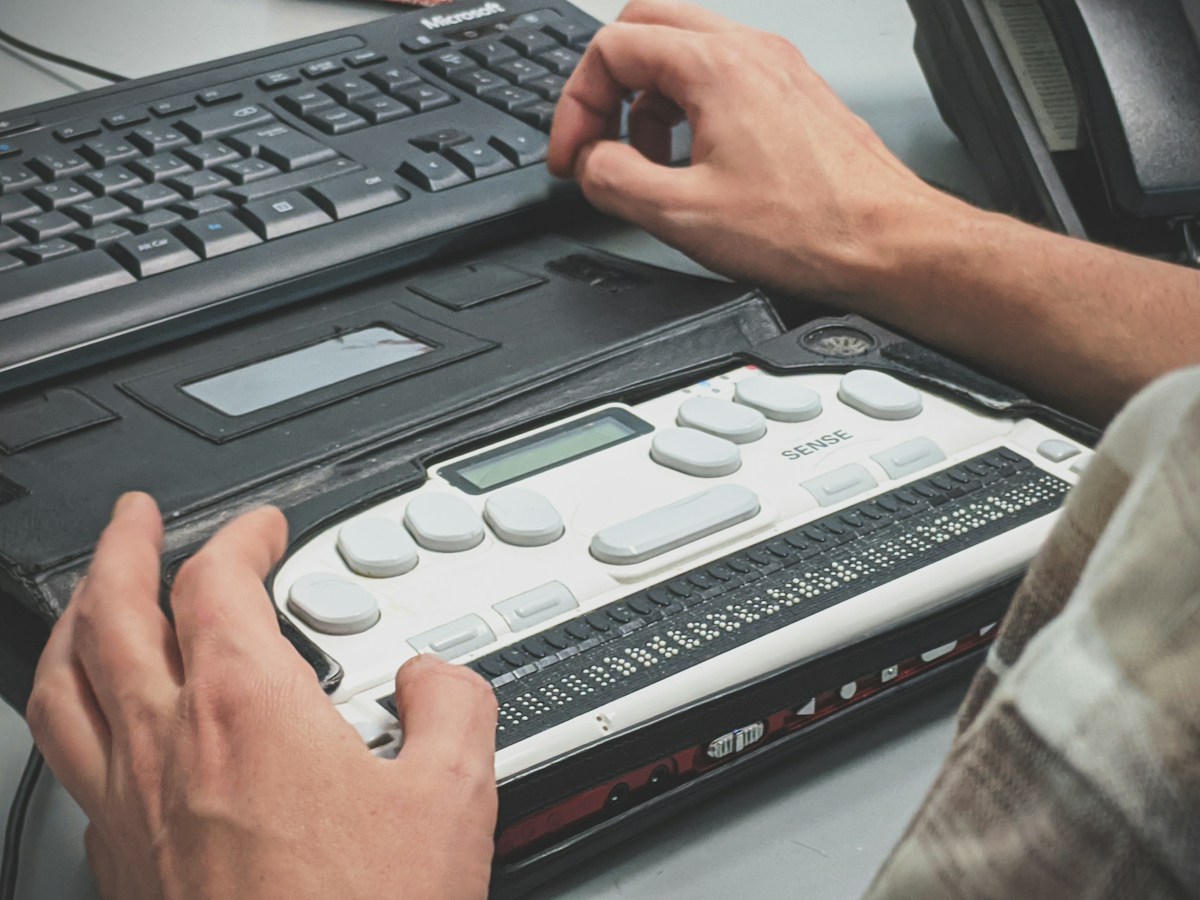
Here is the part that should worry you more than the regulation. Maxwell Ivey has used a screen reader every working day for about forty years. He runs a consulting business, writes a column for PHP Architect, and has appeared on more than four hundred podcasts, entirely through audio. When his father died and the family’s travelling carnival closed, he did not go looking for a disability accommodation. He built a company. And every week he still hits a form, a checkout or a menu that simply does not work for him, on a site built by a company that has no idea he exists as a customer.
What a forty year screen reader user can teach a sighted business owner about getting work done
Ivey’s working day runs entirely through sound. He checks email first, against the advice of every productivity expert he has read, because for years a potential buyer in Australia or South Africa needed an answer before the US workday started. “I check my email, I eliminate all the spam that my spam filter isn’t smart enough to get rid of for me,” he told me. He has his screen reader set to read the first five lines of each message, enough to sort what goes to the top of his list from what can wait.
What struck me is how much of his system is about friction, not talent. “An unlabelled button can turn a two minute job into twenty minutes,” he said. A sighted user skims a page and ignores the clutter. Ivey has to listen to every line in order, so a site with no heading structure, no labelled buttons and no alt text does not just annoy him. It taxes him, every single time he visits it. “I’m really starting to think that we need to eliminate the word normal from our language,” he told me, because his working day looks nothing like a productivity blog’s template, and it still gets the work done.
He also told a story about his first website for Midway Marketplace, the business he built to broker used carnival rides. He picked colors by name instead of hex code, because the hex numbers “didn’t mean nothing to the blind guy.” He remembered that stuffed animals looked good against yellow at the carnival, so he chose yellow for the background, blue for the text and red for the links. Years later, sighted visitors told him the real result: an “ice cream yellow” background, a “dark navy” blue, and a “fluorescent orange like something you see on the side of a dive bar” for previously clicked links. As he put it, “Ray Charles and Stevie Wonder could argue over your website.”
He kept that site anyway and sold hundreds of thousands of dollars of rides on five continents with a website that some people would say was a train wreck. The lesson he draws from it is about perfectionism. “You’re never going to be good enough. Your work is never going to be good enough. If you’re waiting for it to be good enough, you’re never going to do anything with it.” Run your own numbers through the 4 Productivity Vectors methodology before you decide a project is not ready, and you may find the thing holding you back is the color scheme, not the business.
Asking for help is a work skill, and self-reliant people are bad at it
Ivey’s father used to say it on the phone, every winter, when the carnival needed more bookings than their seven or eight rides could fill against competitors with three times as many: “Maxie, if you don’t ask, they can’t say yes. Now stop complaining and dial the next number.” Ivey has turned that line into one of what he calls his five tools, and he names it interdependence on purpose, not independence.
“Productivity culture worships the person who does it all alone,” he told me. For him that worship is not a motivational poster, it is a daily obstacle. Asking for help, and accepting help offered badly, costs him something every single day a sighted person never has to pay. When he travelled 1,500 miles alone by train to his first paid speaking event in Philadelphia, with four hundred dollars in his pocket and no budget for anything beyond the ticket, he had to ask strangers for directions, ask a conductor which platform, ask a stranger to read a sign. “There are some people who still think my family is crazy for letting me leave the house,” he said.

Asking for help is where the self-made myth breaks down fastest, for anyone, not only for someone who cannot see the screen. If you treat every task as something you alone must finish, you will protect your ego and lose the hours. Ivey decided the opposite, early, because the alternative was not finishing at all. That is a harder version of a problem plenty of capable professionals already have: they would rather look competent than ask a question that gets them an answer in five minutes instead of an hour. His father’s line applies the same way at your desk as it did on a carnival phone bank. If you don’t ask, they can’t say yes.
Why 95.9% of websites fail WCAG, and what that actually costs a business
Here is Ivey’s core argument, and he frames it as a business argument before anything else. “If there’s something that is frustrating me, it’s frustrating your sighted users, they just aren’t gonna tell you about it,” he said. “They may suffer through it, if they feel like you have the product they need at that moment. They may go to your competitor.” A disabled customer who hits a broken checkout rarely files a complaint. He described it simply: “I’m not on Walmart’s website, I’m not on Amazon’s website. The odds are there’s somebody else I can do business with.”
The World Health Organization puts the number of people living with a significant disability at roughly 1.3 billion, about one in six people on the planet. Closed captions, invented for deaf viewers, are now used by 42 percent of Americans who will not watch a video without them, often in a loud room or a quiet one where they cannot risk the audio. Dark mode, now a setting on every phone, traces back to monitors built in the 1970s for people with low vision. Accessible design does not serve a niche. It gets adopted by everyone once it exists.
Automated fixes are where Ivey gets specific about where the industry is lying to itself. He has worked with AudioEye, an accessibility technology company, as a paid host of their Hearsay Shorts series, so he is not against automation on principle. But he was blunt about overlays, the JavaScript widgets that promise to make a broken site compliant with one line of code: “Any business that’s using an overlay to make a website that’s not accessible accessible, because ninety nine point nine nine percent of the time that’s gonna fail and make things worse.” The FTC agreed with him in April 2025, when it fined the overlay company accessiBe one million dollars for claiming its AI tool made any website compliant.

Why does Ivey choose education and collaboration over lawsuits and shame, when lawsuits clearly move some companies faster? His answer treats accessibility as a competitive decision he is building on purpose. “Business owners need to think more about accessibility as a competitive advantage, as an opportunity to excel and to be in front of their competitors in a way others will not embrace without being forced to.” Accessible code is also leaner code, which loads faster and is cheaper to update. It is also easier for search engines and AI systems to parse, because both depend on content that is labelled clearly: real headings, described images, text that is text and not a picture of text.
If you want a gut check on where your own week leaks time the way a cluttered website leaks customers, the free productivity quiz takes five minutes and gives you one place to start.
Frequently asked questions about WCAG and web accessibility
What is WCAG?
WCAG stands for the Web Content Accessibility Guidelines, the standard that defines whether a website can be used by someone with a screen reader, low vision, limited motor control or a hearing impairment. It is the benchmark the WebAIM Million report and nearly every accessibility testing tool checks against.
What is the top WCAG failure businesses miss?
Low contrast text, found on 83.9 percent of the top million home pages checked in the 2026 WebAIM Million report, followed by missing alt text on images (53.1 percent) and missing form labels (51 percent).
Do accessibility overlays actually work?
Ivey’s answer, and the FTC’s one million dollar fine against accessiBe in April 2025, both say no. A one line JavaScript overlay cannot fix markup that was never built to be accessible. Real accessibility testing checks the code itself, not a layer on top of it.
Where should a small business start?
Alt text on every meaningful image, labels on every form field, and a contrast check on body text against its background. None of those require a developer with years of accessibility testing experience. All three are things Ivey says get missed on nearly every site he audits.
Ivey’s own line sums up the whole conversation better than any framework I could draw over it: “accessibility isn’t just about compliance, it’s about reputation, innovation, and growth.” If his forty years of working entirely by audio can still run a company, write books and sing on stage at a national conference, your website does not get to call “we didn’t have time” an excuse. Start with the alt text this week. The customers who left without telling you are waiting to find out you noticed.
If you want to put a number on how your own week runs before you fix anyone else’s, the Productivity Assessment takes five minutes.